Barcelona gives the Eixample back to pedestrians
“
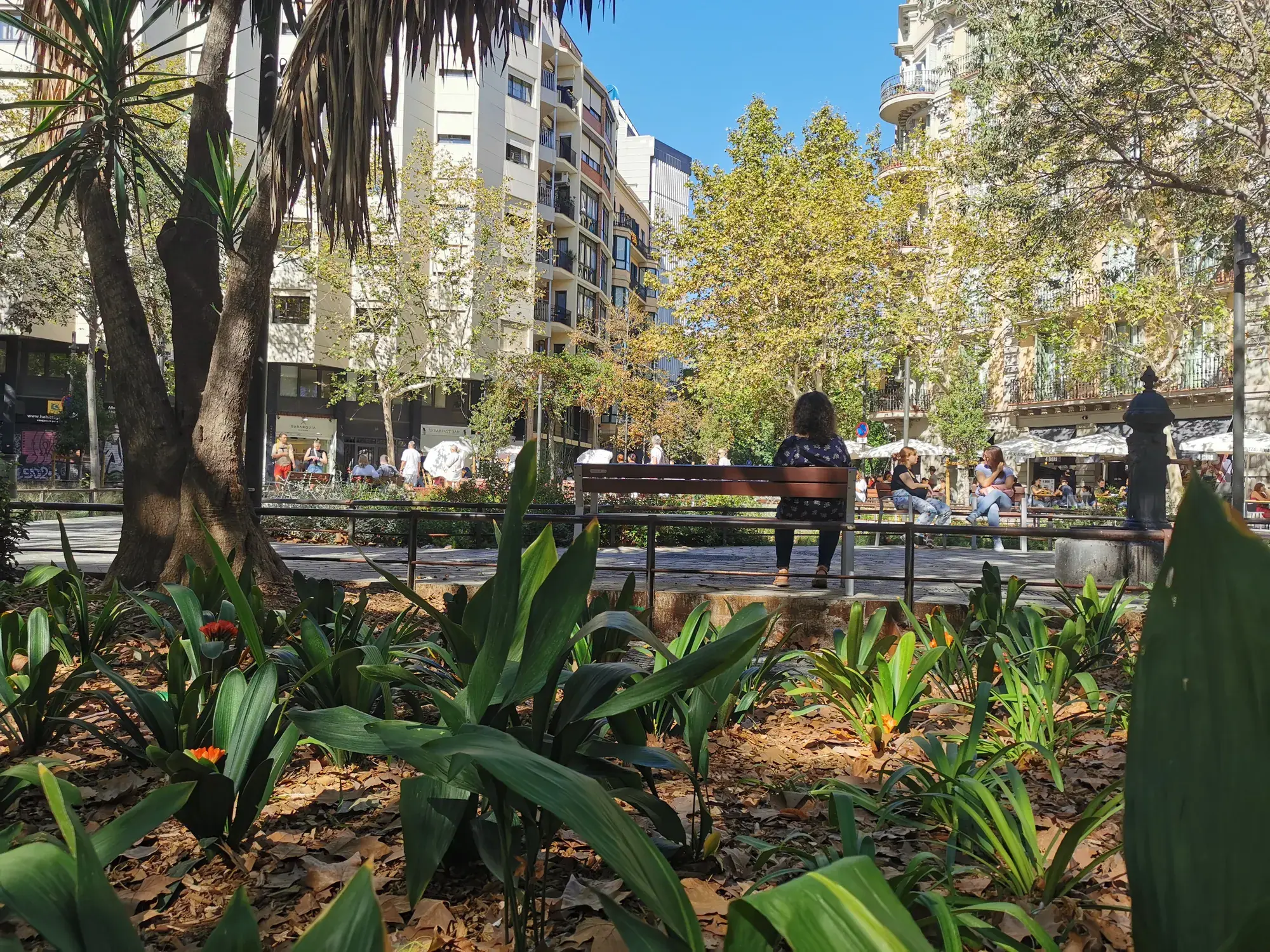
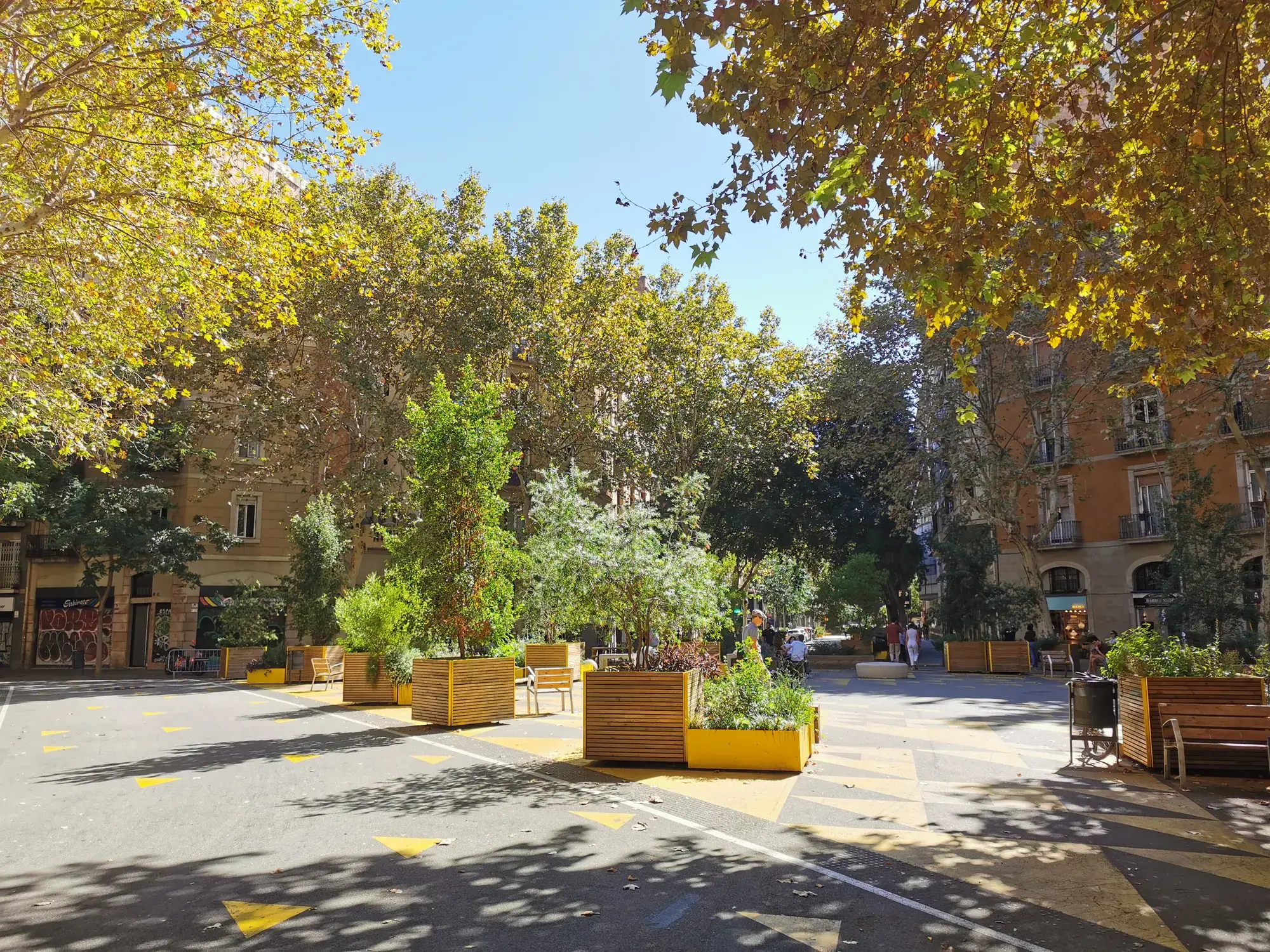
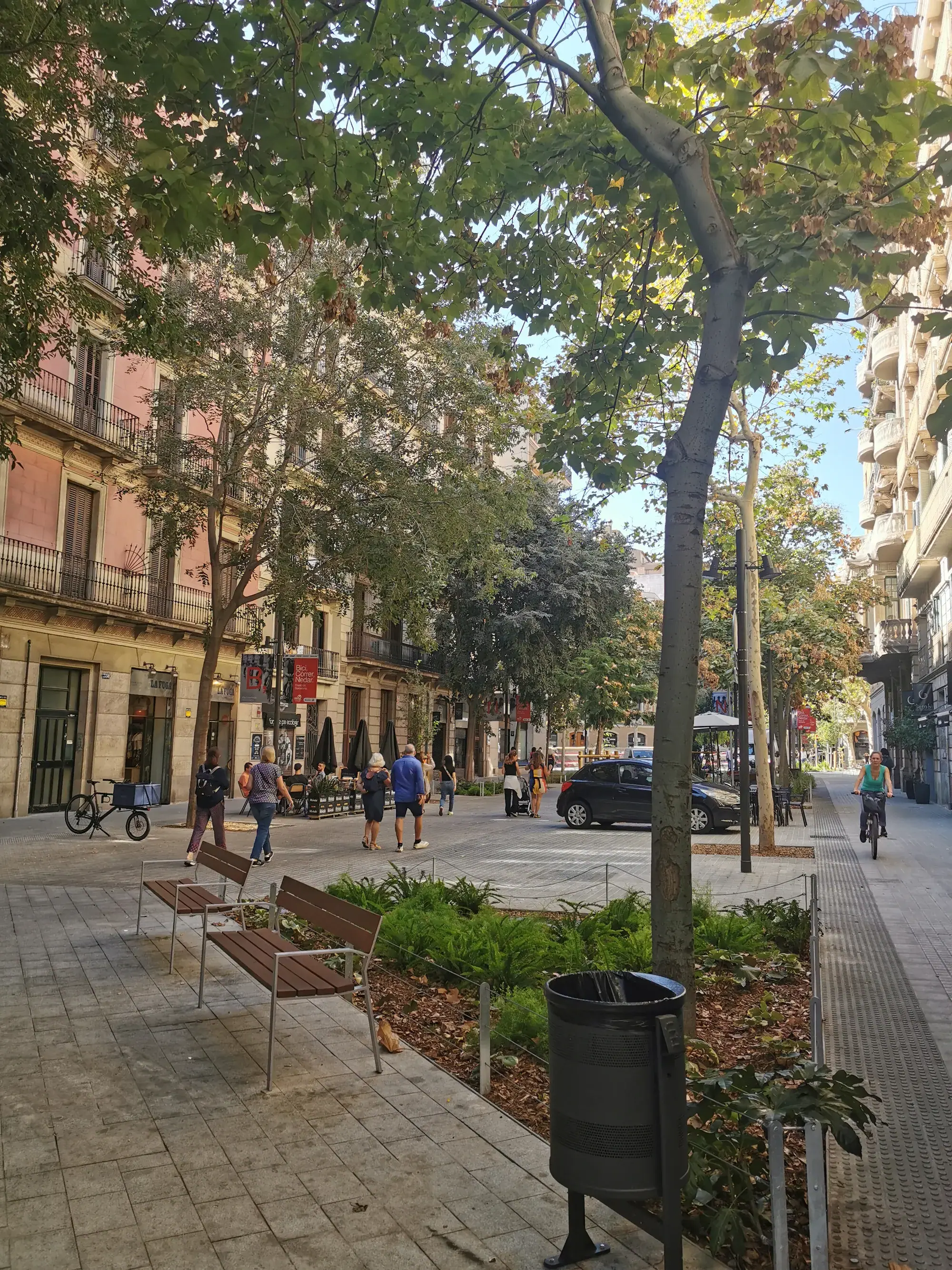
Since 2016 Barcelona has been grouping city blocks into “superilles”, or superblocks: cars give up part of the roadway, and the inner streets become squares, benches and planted beds. In Sant Antoni, 23,709 m² went back to pedestrians. In the Eixample, four streets lost their asphalt and four crossroads became squares of about 2,000 m².
Ildefons Cerdà’s 19th-century grid gave the Eixample its square blocks and bevelled corners. According to the city, it also made it the district most exposed to traffic, noise and pollution, and the poorest in green space. The agency BCNecologia, led by Salvador Rueda, came up with the answer: group several blocks into a “superilla” and give pedestrians back part of the space taken by cars. Its initial plan called for 503 superblocks across the city.
The first full-scale trial came in September 2016 in Poblenou, between Badajoz, Pallars, Llacuna and Tànger streets. The city started with paint, street furniture and trees in planters, all reversible. After residents’ complaints and proposals, a working committee with neighbourhood associations adjusted the traffic plan, which became permanent in early 2017. Two freed-up crossroads became squares with picnic tables, play areas and a literary trail, and Almogàvers street was rebuilt from autumn 2017.
In Sant Antoni, the city first brought together a steering group of residents, shopkeepers and parents’ associations in February 2017. The first phase was completed in May 2018 around the renovated Sant Antoni market: a 1,800 m² square and 5,000 m² of pedestrian space with the neighbouring streets. Comte Borrell, Tamarit, Manso and Parlament streets followed. In all, 23,709 m² of roadway went back to pedestrians.

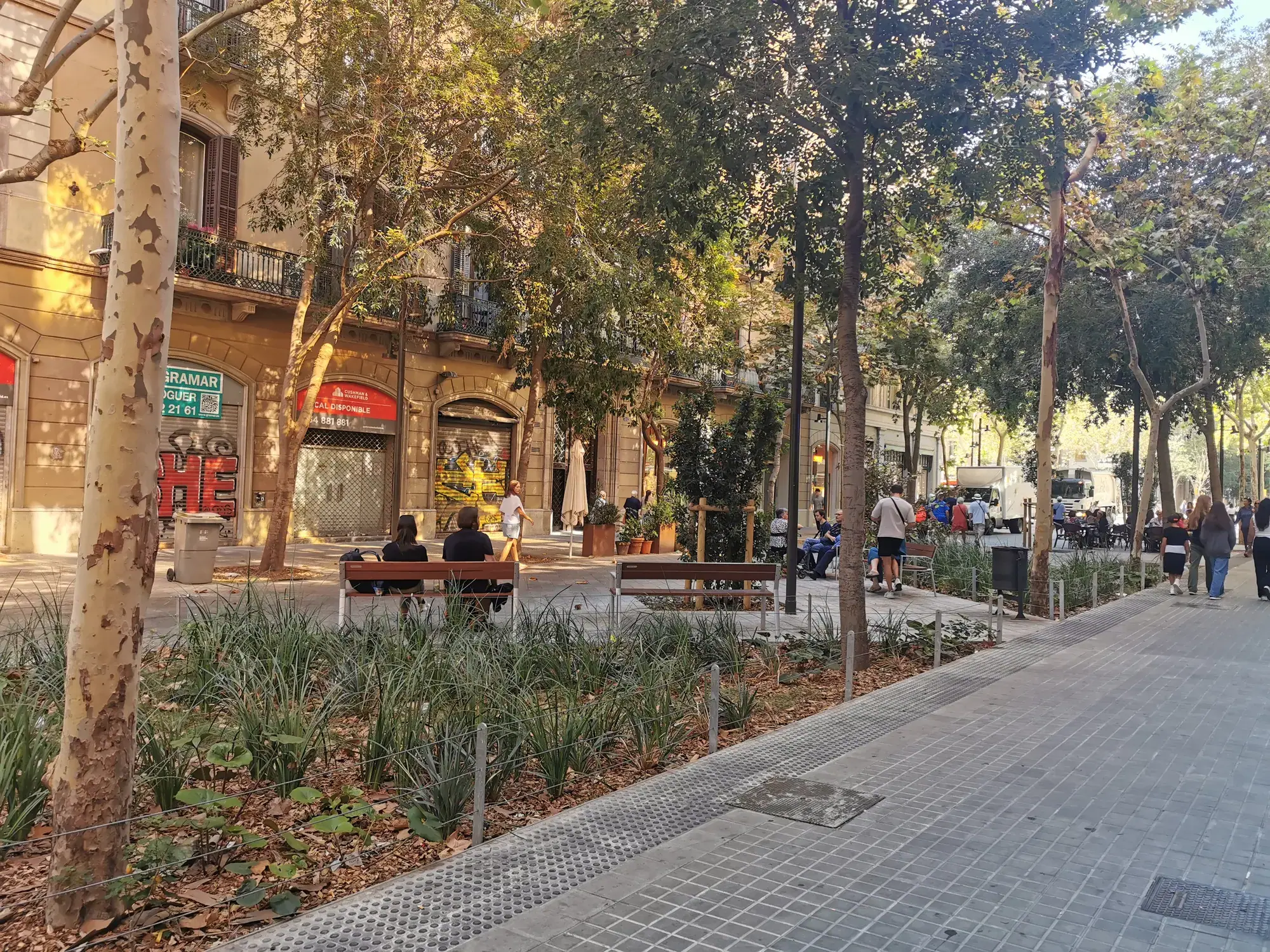
In November 2020 the city extended the model to the whole Eixample under the name Superilla Barcelona: 21 “green axes” over 33 km and 21 new squares at the intersections, 33.4 hectares in all given priority for pedestrians, with the aim of a square or green axis within 200 metres of every resident. The first phase transformed Consell de Cent, Rocafort, Comte Borrell and Girona streets, with an announced budget of €48.2 million. The asphalt and the traffic lanes are gone; residents’ and service vehicles drive at 10 km/h. The four intersections of Consell de Cent with Rocafort, Comte Borrell, Enric Granados and Girona became squares of about 2,000 m².
The health effects have been quantified. In 2019 the Barcelona Institute for Global Health (ISGlobal) estimated in Environment International that the 503 superblocks of the original plan would prevent 667 premature deaths a year, mainly through lower nitrogen dioxide (from 47 to 36 µg/m³ as an annual average, 24% less), less noise and less heat, and add almost 200 days of life expectancy per inhabitant. Its lead author, Natalie Mueller, asked for the figures to be read with caution, as the method has its limits.
The model is still contested. Since September 2023 several rulings have annulled sections of the Consell de Cent axis: in the judges’ view, the city should have amended the Metropolitan General Plan. In March 2025 the High Court of Justice of Catalonia upheld the annulment for the Enric Granados intersection; the city announced an appeal and says it will keep calming streets through dialogue. Its website now describes the Superilles programme in the past tense. The streets remain open to all: a group can walk up Comte Borrell street from Sant Antoni market to the Consell de Cent intersection, passing in a few blocks from the 2018 market square to the green axes of 2023.
The Sant Antoni superblock returned 23,709 m² of roadway to pedestrians between 2018 and 2019. In the Eixample, the Superilla Barcelona plan presented in 2020 provides for 21 green axes over 33 km and 21 squares, 33.4 hectares in all; its first phase, budgeted at €48.2 million, transformed four streets and created four squares of about 2,000 m². According to ISGlobal (2019), the 503 superblocks of the original plan would prevent 667 premature deaths a year and cut nitrogen dioxide by 24%.
Photos: Cataleirxs, Wikimedia Commons (CC BY-SA 4.0: 1 2 3 4 5).
Would you like to meet these people with your team? in:Expeditions designs tailor-made learning expeditions around places like this one.
 Or design it yourself with Agent A\lex →What is a learning expedition? →Learning expedition: Catalonia, the new autonomies →