Cascina Cuccagna feeds its neighbourhood
“
A quarter of an hour’s walk from the Duomo, a 17th-century farmhouse had stood closed since 1994. Local residents won the concession in 2005, raised more than €3 million and reopened it in 2012. Cascina Cuccagna now welcomes more than 250,000 visits a year and houses one of the eight food hubs that won Milan the Earthshot Prize.
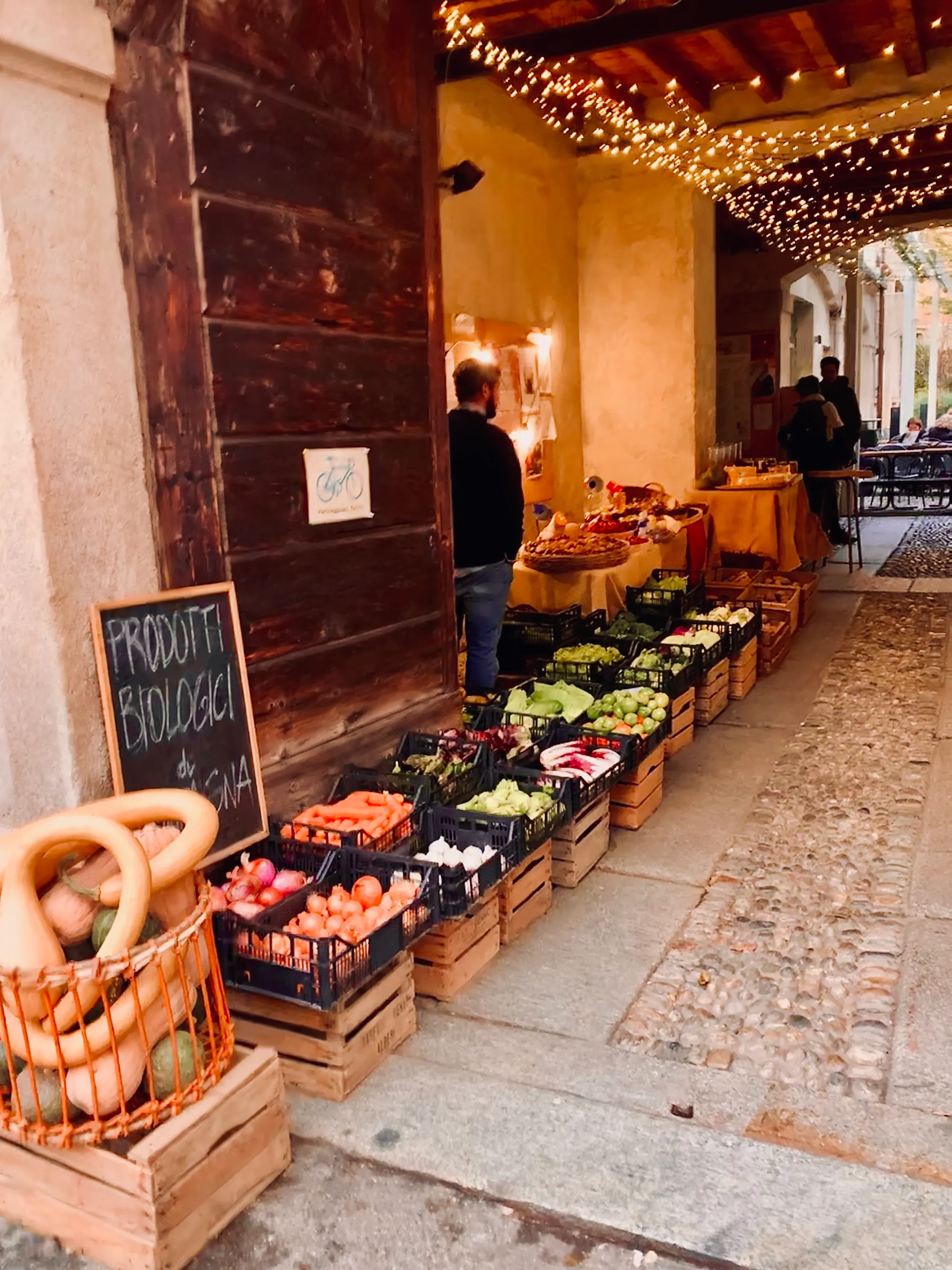
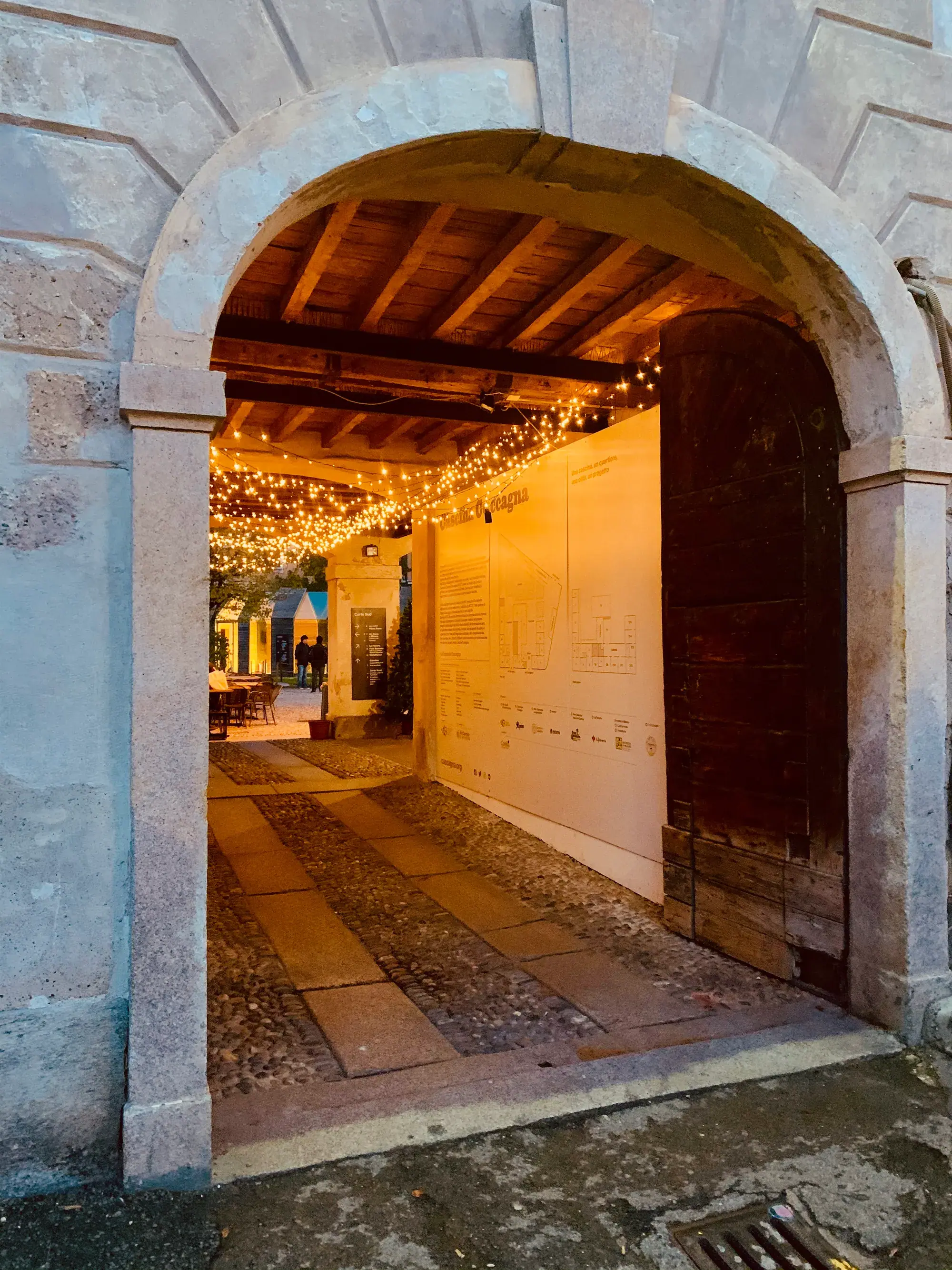
The farmhouse already appears on the Theresian land register of 1722, under the name Cassina Torchio. Medicinal herbs were grown there for the Ospedale Maggiore, Milan’s great hospital. The city gradually closed in around it, and the Cuccagna now sits behind Porta Romana. It served in turn as a coaching inn, a grocer’s and workshops for local craftsmen, was declared unfit for use in the 1980s and closed in 1994.
Between 1991 and 1998, residents set up a cooperative to save it. In 2005 the city, which owns the building, granted it for twenty years to the Associazione Consorzio Cantiere Cuccagna, created for the purpose. It was the first municipal building recovered through a tender of this kind. “For the very first time, the city was handing one of its properties to private parties so they would restore it and give it back to the city,” Andrea Di Stefano, the association’s president, said in 2022.
Work ran from December 2008 to April 2012 under the architect Marco Dezzi Bardeschi, a heritage specialist; new additions remain legible beside the old walls. More than €3 million came from the Fondazione Cariplo and a citizens’ fundraising drive, “Contadino urbano”, at no cost to the city. In return the association pays it more than €65,000 a year in rent. It has since invested a further €321,000 against earthquake risk, including a training site open to the public in 2022.

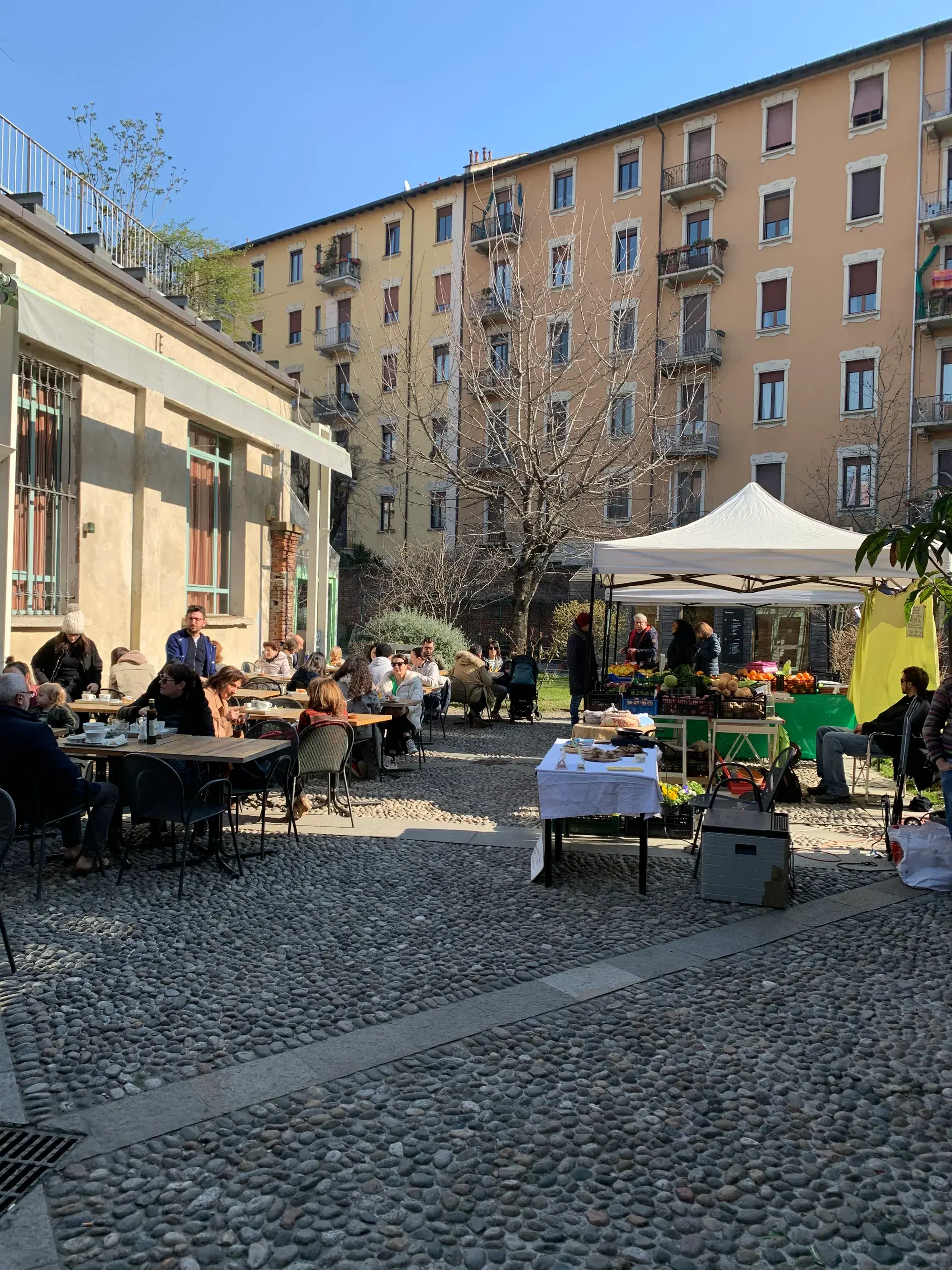
The cascina covers 4,000 m²: pebble-paved courtyards, rooms, gardens, a plant nursery, and a restaurant and guesthouse run by un Posto a Milano. Every Tuesday afternoon a farmers’ market brings growers and city dwellers together. According to its 2025 social report, it receives more than 250,000 visits a year and 98% of its activities are free. That year its FiloDritto sewing workshop took in 35 women who were in prison or had recently left.
Under the south archway runs a food aid hub designed and backed by the city’s Food Policy office. It belongs to the network launched in 2019 in the Isola district, which won the first Earthshot Prize in the waste category in 2021. In 2025 Milan’s eight hubs recovered 1,057 tonnes of surplus food, more than 2 million meals, for 18,000 families. At the Cuccagna, around 150 families supported by Emergency’s Nessuno Escluso programme choose their own products in a points-based community shop. The association Recup brings fruit and vegetables saved at the Ortomercato wholesale market by electric cargo bike.
For a team, the farmhouse is reached by tram (lines 9 and 16) or metro (Lodi TIBB, line 3). The association runs guided tours of the project on request, in Italian and English, and rents out several rooms and a courtyard for meetings and events.
Restored between 2008 and 2012 for more than €3 million at no cost to the City of Milan, which owns it and receives more than €65,000 a year in rent from the association, Cascina Cuccagna covers 4,000 m² and receives more than 250,000 visits a year; 98% of its activities are free (2025 social report). Its food aid hub supports around 150 families. The Milan network it belongs to, winner of the 2021 Earthshot Prize, recovered 1,057 tonnes of surplus food in 2025, 32% more than in 2024, or more than 2 million meals for 18,000 families.
Photos: Sordelli, Wikimedia Commons (CC BY-SA 3.0: 1) ; Bonfelix, Wikimedia Commons (CC BY-SA 4.0: 2 3 4 5).
Would you like to meet these people with your team? in:Expeditions designs tailor-made learning expeditions around places like this one.
 Or design it yourself with Agent A\lex →What is a learning expedition? →Learning expedition: Milan and Turin, europe's new workshops →