The Eden Project replants its slopes, twenty-five years after opening in Cornwall
“
In the late 1990s a small team bought an exhausted china clay pit near St Austell: 60 metres deep, no soil, its floor 15 metres below the water table. The Eden Project opened there on 17 March 2001. In October 2026 its gardeners, hanging on ropes, were still planting a slope that had slipped in 2020.
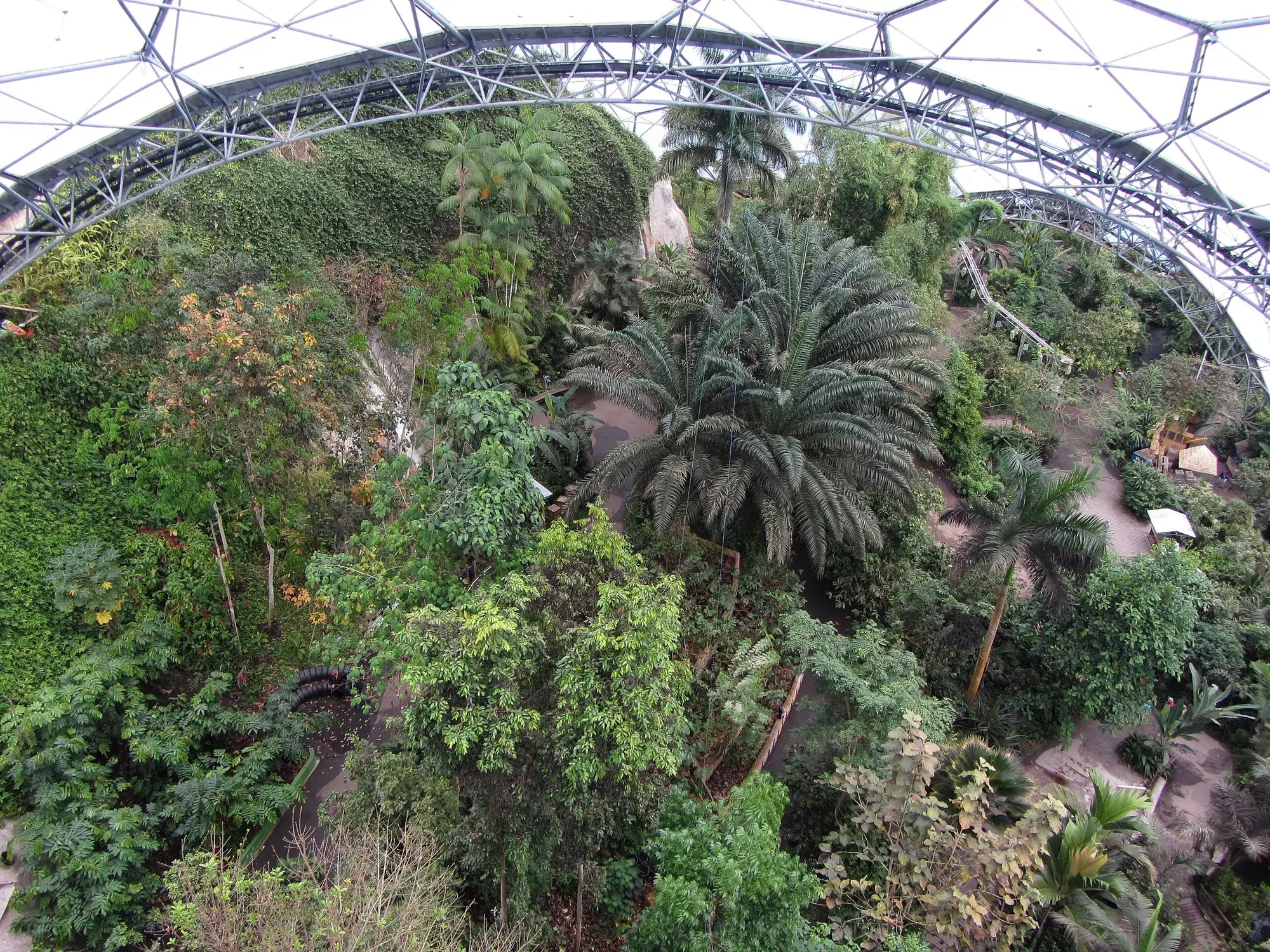
Bodelva was a china clay pit, the kaolin that built the economy of the St Austell area. When the group gathered around Tim Smit bought it in the late 1990s, there was no earth and no plant life, and the floor of the pit lay below the water table. The charity tells it plainly: the soil had to be made from materials regarded as waste, and the walls were stabilised with 2,000 rock anchors, each 11 metres long. During the build, 43 million gallons of rain fell in 90 days. The project received £56 million from the Millennium Commission, funded by the National Lottery, and welcomed 1.8 million visitors in its first year.
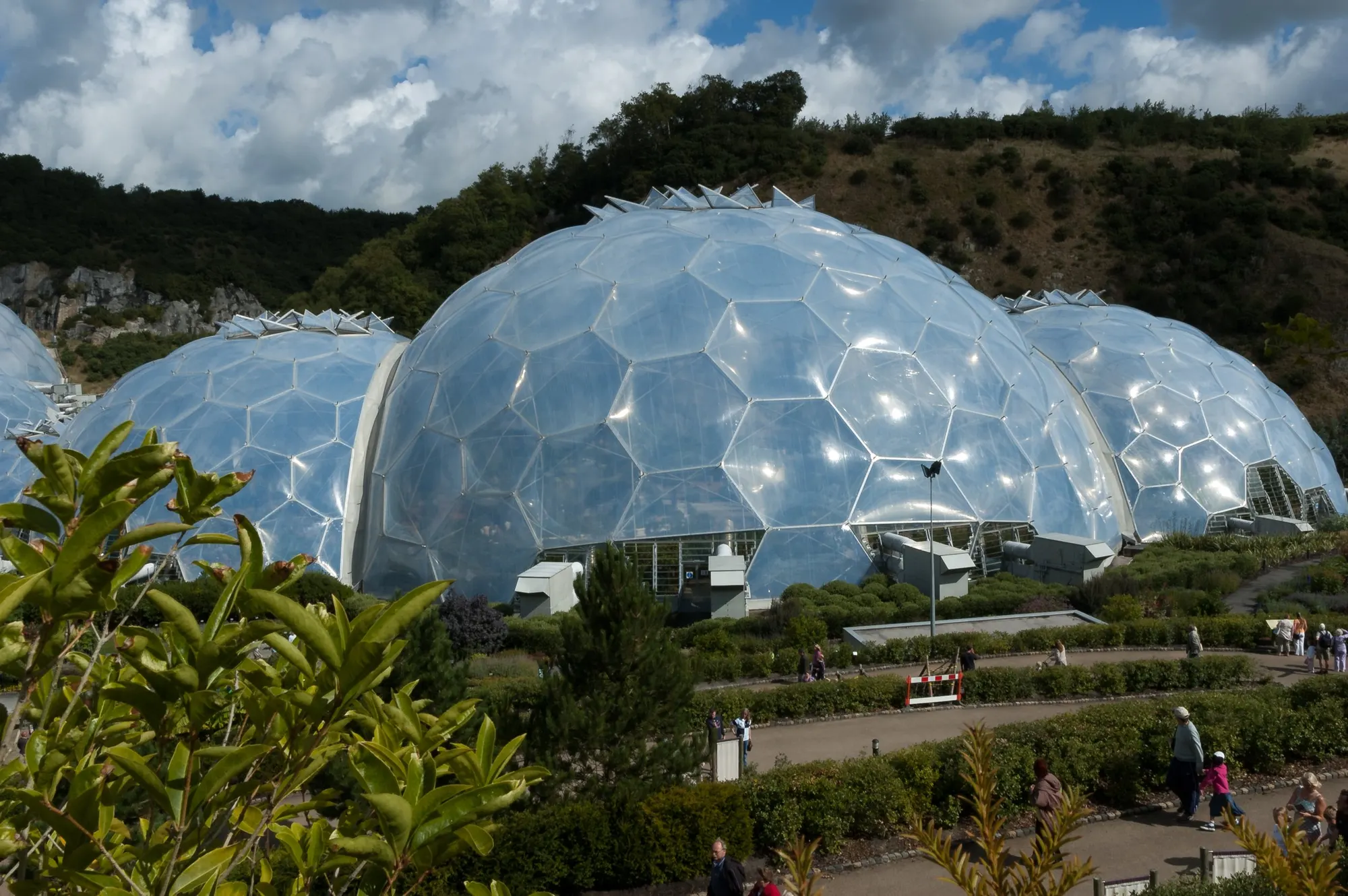
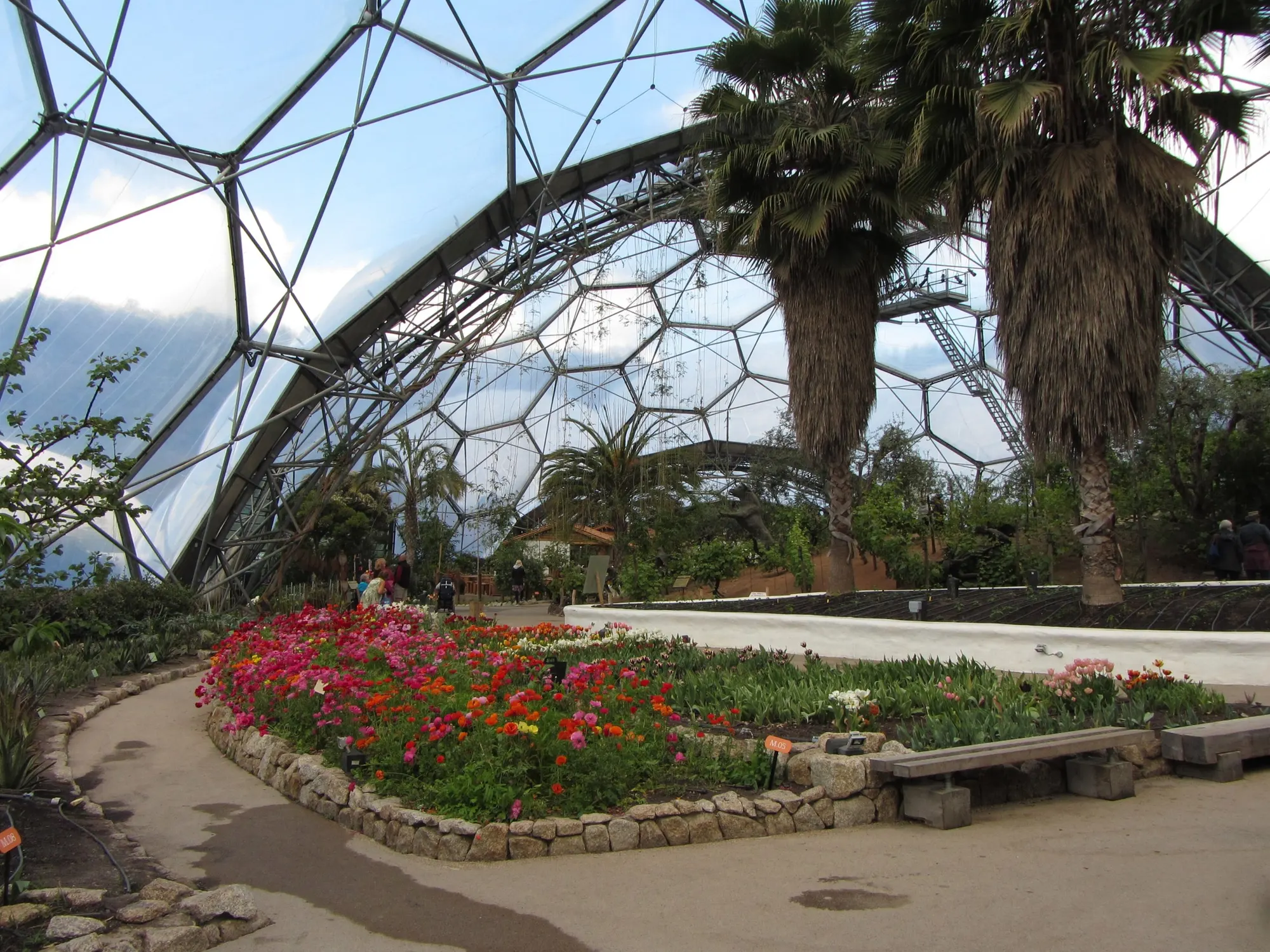
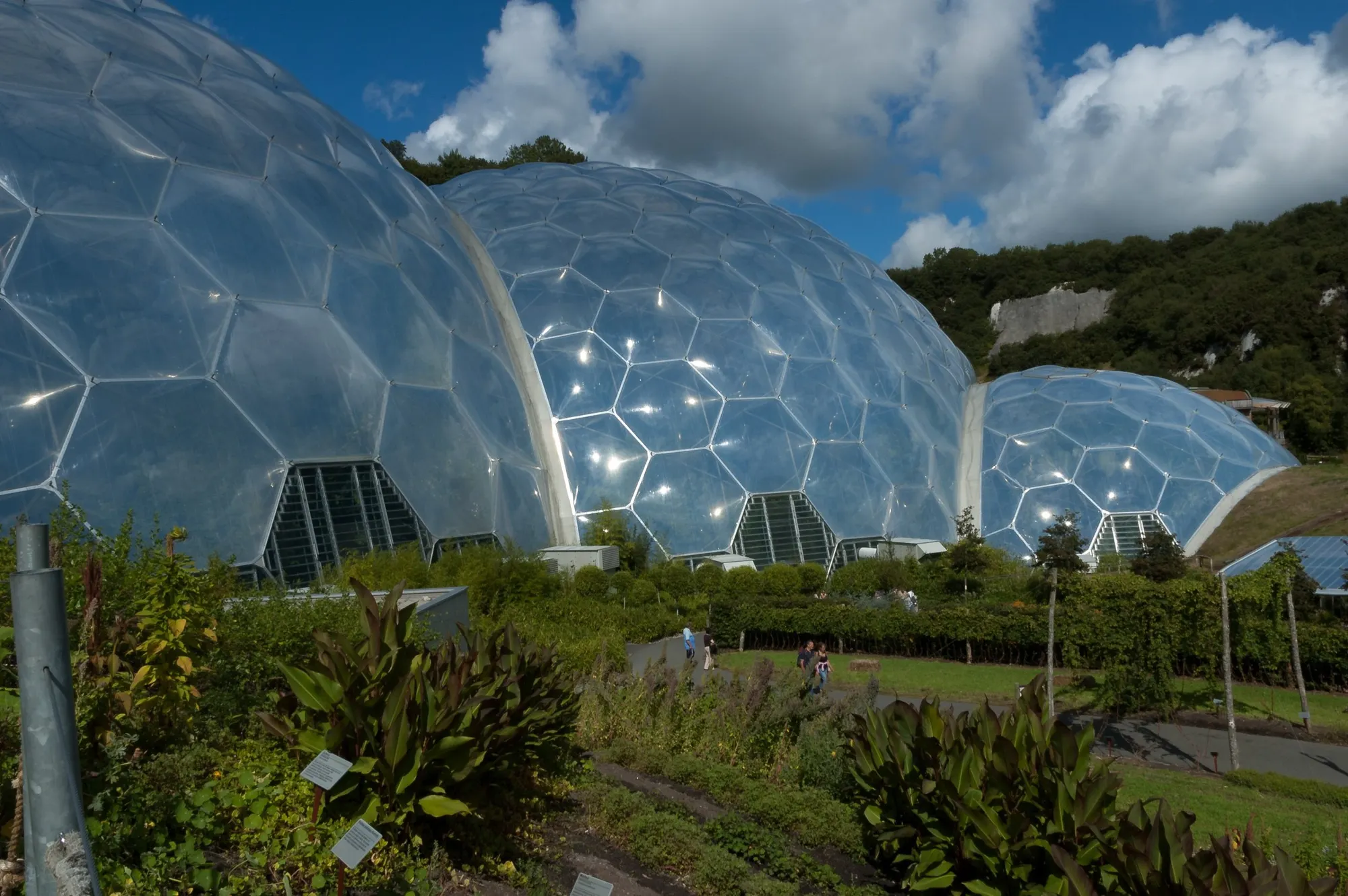
The pit was still being worked while Grimshaw designed the greenhouses, and the ground shifted from one month to the next. The architects started from soap bubbles, which settle on any surface and always meet at a vertical line. Each dome is a two-layer steel frame, hexagons outside (the largest is 11 metres across), hexagons and triangles inside. The windows are three-layer ETFE cushions, inflated to a depth of two metres and weighing less than 1% of the equivalent area of glass. The Rainforest Biome covers about 16,000 m² and stands 50 metres high, the Mediterranean Biome 6,540 m² and 30 metres. Nicholas Grimshaw died in September 2025, aged 85.
The Eden Project is an educational charity, the Eden Trust, whose work relies on tickets, memberships and donations. The report it published for its 25th year, in March 2026, claims 25 million visitors since opening, £8.4 billion in visitor spending and £6.8 billion of economic impact for the South West, including £5.7 billion of net additional impact for Cornwall. These are the charity’s own figures. The accounts filed for the year to 31 March 2025 show the other side: 543,000 visitors against 604,000 the year before, a pre-tax loss of £3.5 million against £1.5 million, and a restructuring that cut 75 jobs. Chief executive Andy Jasper then described 2026 as a pivotal year, with construction due to start on Eden Project Morecambe, planned to open in late 2028.

On site, the conversion shows in the installations. Since June 2023 a 5-kilometre geothermal well in the granite has heated the Biomes and buildings on site; the charity puts the saving at up to 500 tonnes of CO2 a year and says it has cut its gas use to almost nothing. In October 2026 the horticulture team spent a fortnight on ropes planting a Silver Staircase on the western side: bands of tree germander alternate with sea rosemary, otter bush and silver spear, all silver-leaved evergreens. The slope had slipped in 2020. The scheme follows the principle of landscape architect Dominic Cole, who from the start preferred to hold the cliff faces with roots rather than engineering.
A team can join the free 40-minute guided walks that run on most days in both Biomes, with no booking, or book a private tour with a guide: in 2026 the Premium Rainforest Experience costs £132.50 per adult, the Premium Horticulture Experience £195 and the Premium Mediterranean Experience £92.50. The site also hires out spaces for events. For a leadership team working on the conversion of an industrial site, public funding for a cultural venue or managing climate risk on fragile ground, Eden shows its successes and its difficult numbers in the same place, twenty-five years after opening.
Opened on 17 March 2001 in a china clay pit with no soil, the Eden Project claims 25 million visitors and £6.8 billion of economic impact for the South West (charity report, March 2026). Its 2024-25 accounts record 543,000 visitors and a £3.5 million loss. A 5 km geothermal well has heated the Biomes since 2023.
Photos: Chris Gorringe, Wikimedia Commons (CC BY-SA 2.0: 1 4) ; Gareth James, Wikimedia Commons (CC BY-SA 2.0: 2 3) ; Paul Farmer, Wikimedia Commons (CC BY-SA 2.0: 5).
Would you like to meet these people with your team? in:Expeditions designs tailor-made learning expeditions around places like this one.
 Or design it yourself with Agent A\lex →What is a learning expedition? →