Haus der Statistik is built by five equal partners
“
Near Alexanderplatz, the former headquarters of East Germany’s statistics office was due to be demolished. In 2015 artists hung a fake construction sign on its façade promising spaces for art and social projects. Today the State of Berlin, the borough, two public companies and a citizens’ cooperative are turning it into a neighbourhood they run with equal votes.
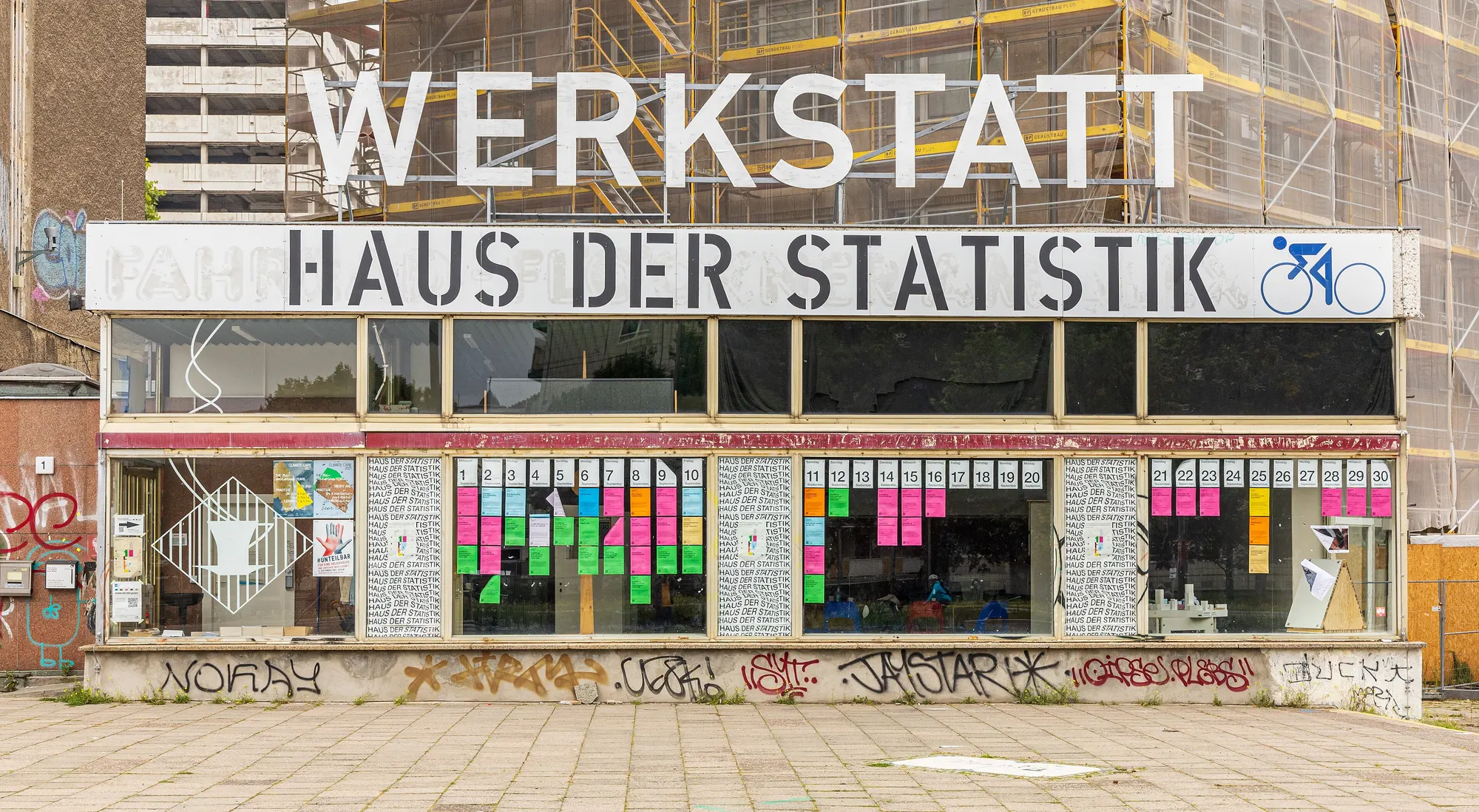
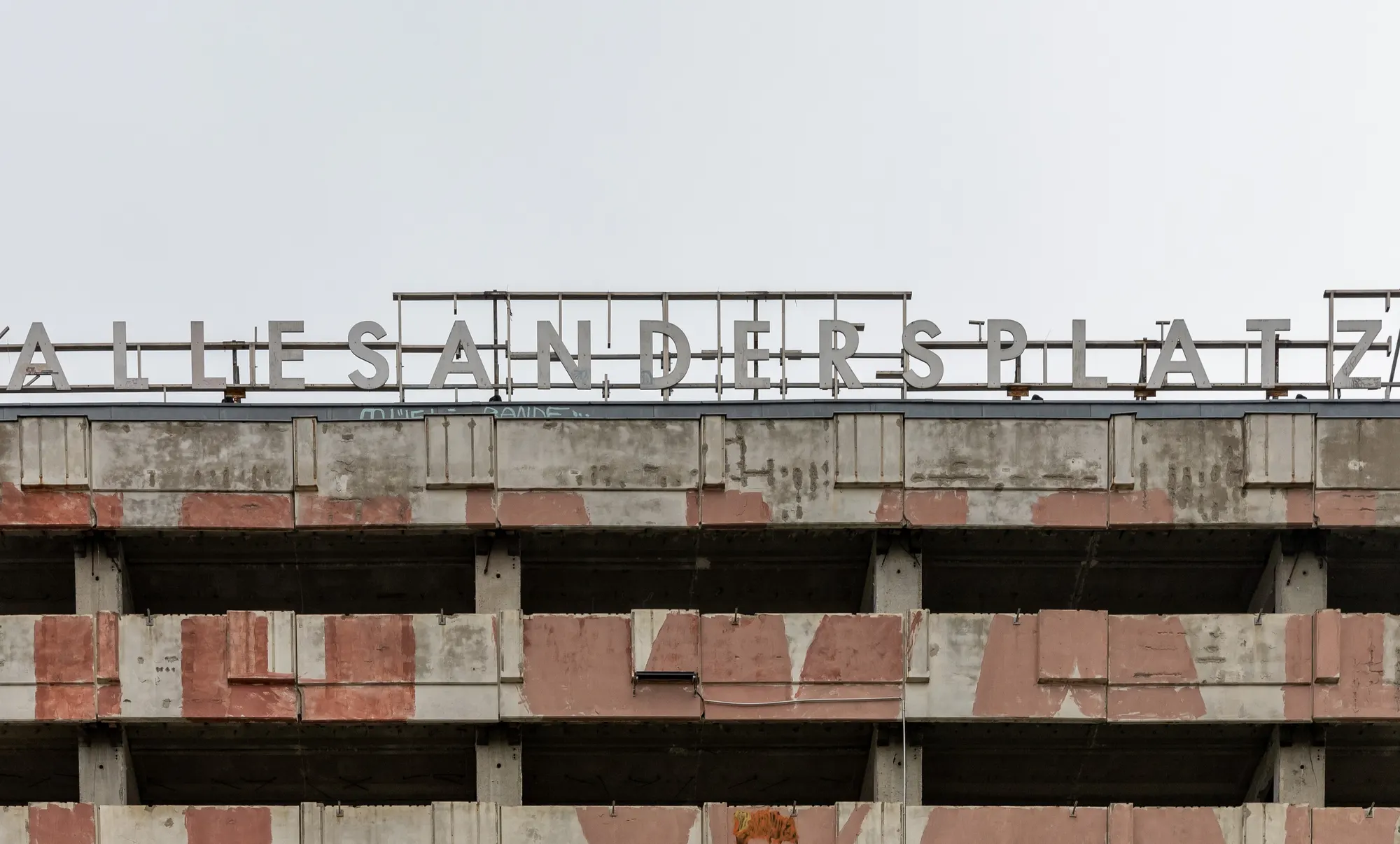
Haus der Statistik was built between 1968 and 1970 for the GDR’s central statistics administration, which put some 2,700 workplaces there on the edge of Karl-Marx-Allee. After reunification the Federal Statistical Office and the authority in charge of the Stasi files moved in, then left in 2008. The complex stood empty. The federal government, which owned it, planned to demolish it and sell the land; the scheme chosen in 2010 would have put more than 94,000 m² of new floor space on the site.
In September 2015 the Alliance of Threatened Berlin Studio Buildings (AbBA) hung a fictitious construction sign on the façade: “Spaces for art, culture and social projects are being created here for Berlin.” The prank became a plan. An initiative of artists, architects, cultural workers and politicians got the demolition and sale plans dropped, and the State of Berlin bought the complex from the federal government in 2017.
In January 2018 five partners signed a cooperation with no lead partner, known as KOOP5: Berlin’s urban development department, the borough of Mitte, the housing company WBM, the state property manager BIM and the cooperative ZUsammenKUNFT Berlin, which grew out of the initiative. The masterplan was drawn up in open workshops in 2018 and 2019 by the practices Teleinternetcafe and Treibhaus. “We developed it as five partners who were all equal. There was never anyone at the top making the decisions,” says Ephraim Gothe, Mitte’s councillor for urban development.

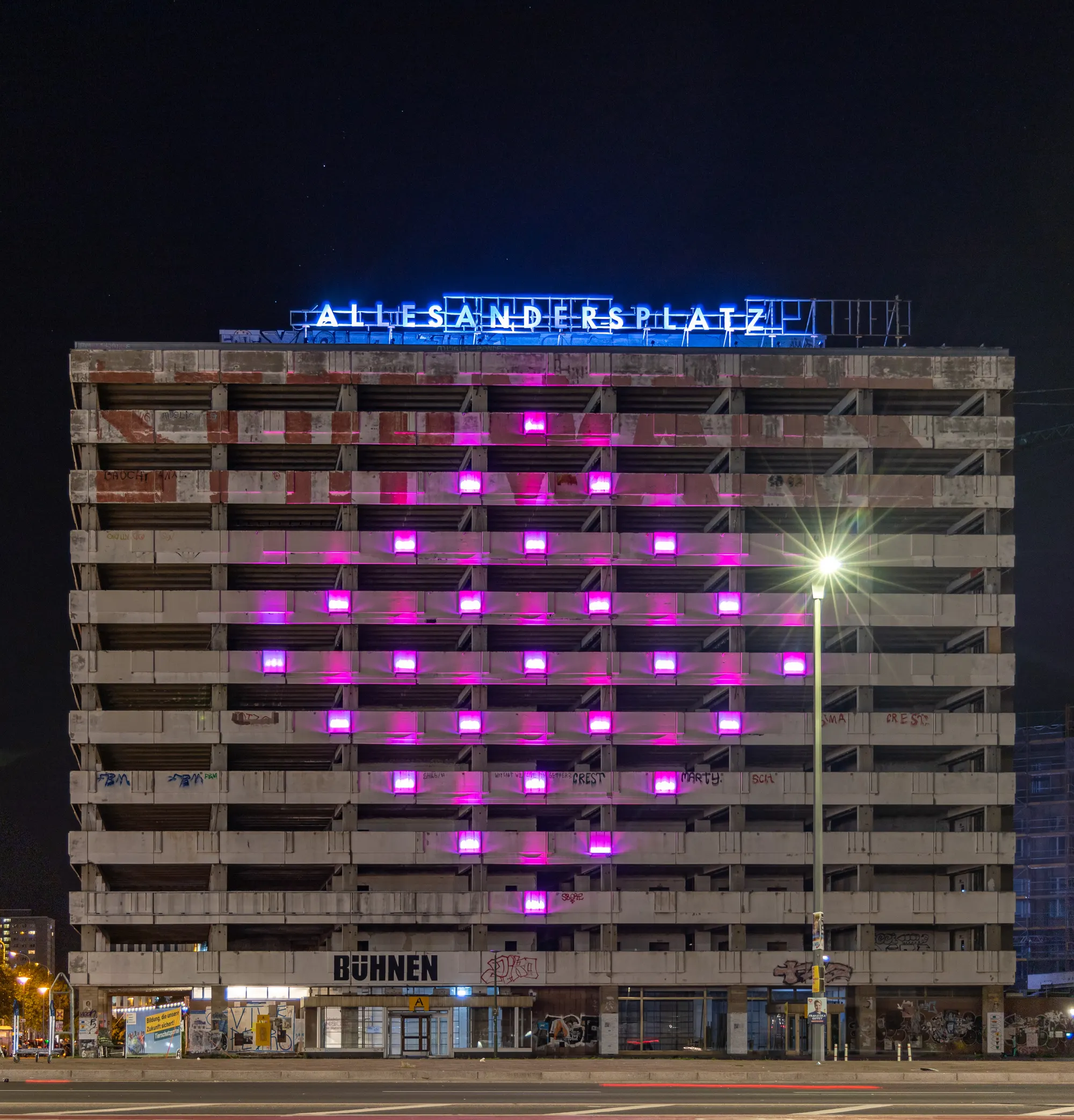
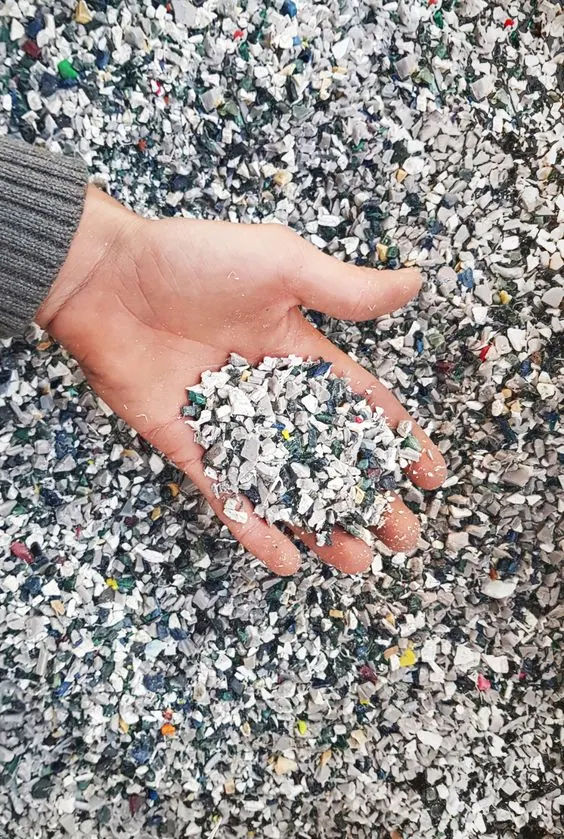
The site did not wait for the plans to be finished. From 2019 to 2022 “pioneer users” occupied the run-down ground floors; since 2022 they have run temporary pavilions called OTTO and KARLA: textile repair workshops, plastic recycling, a choir, a community kitchen, projects with refugees. On the roof, giant letters spell “Allesandersplatz”, a pun on Alexanderplatz: the square where everything is different.
The work is now in its final phase. Since 2025 the Mitte-Tiergarten tax office has been moving into the renovated buildings B and C; BIM will have its headquarters in building D. On 8 May 2026 the keys to tower A were symbolically handed to civil society: over the next 12 to 16 months more than 50 organisations will fit out 6,500 m² of permanently secured space there for culture, education and social projects. On the northern part of the site, WBM is building nearly 300 affordable homes and the borough its new town hall.
The neighbourhood is open to visitors. The WERKSTATT information point in the KARLA pavilion presents the project; group tours can be arranged on request, and public tours take place during the Ko-Markt open days. A team can see how a city administration, public companies and a citizens’ cooperative jointly run a public asset in the middle of a capital, with equal votes.
Saved from demolition, Haus der Statistik covers some 46,000 m² of existing buildings renovated and given new uses, plus around 65,000 m² of new construction: nearly 300 affordable homes, half of them subsidised, Mitte’s new town hall (about 26,000 m²), three timber “experimental houses” (2028 to 2030) and around 3,000 m² of ground floors reserved for public-interest uses. More than 50 organisations are preparing to move into tower A. Green roofs, around 300 solar panels, heat pumps and heat recovered from wastewater make up the energy system.
Photos via Wikimedia Commons: Matthias Süßen (CC BY-SA 4.0: 1 2 3 4) ; Spielvogel (CC0: 5).
Would you like to meet these people with your team? in:Expeditions designs tailor-made learning expeditions around places like this one.
 Or design it yourself with Agent A\lex →Learning expedition: Berlin, the Impossible is Temporary →