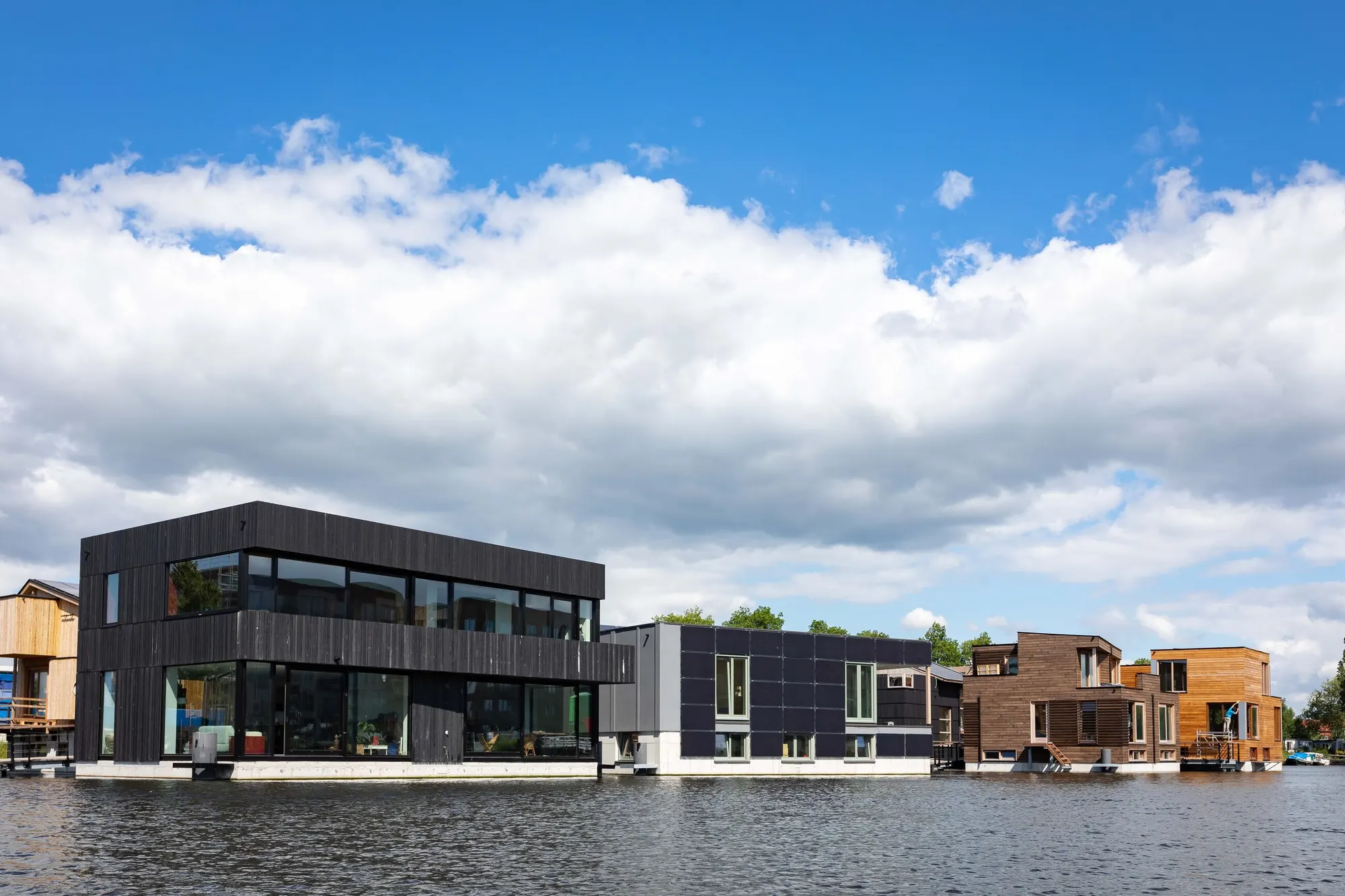
On a former industrial canal in Amsterdam-Noord, 46 households have lived since 2019 on 30 floating arks linked by a shared jetty. The residents carried the whole project themselves, from the site to the permits, with no developer. The entire neighbourhood has a single connection to the national power grid.
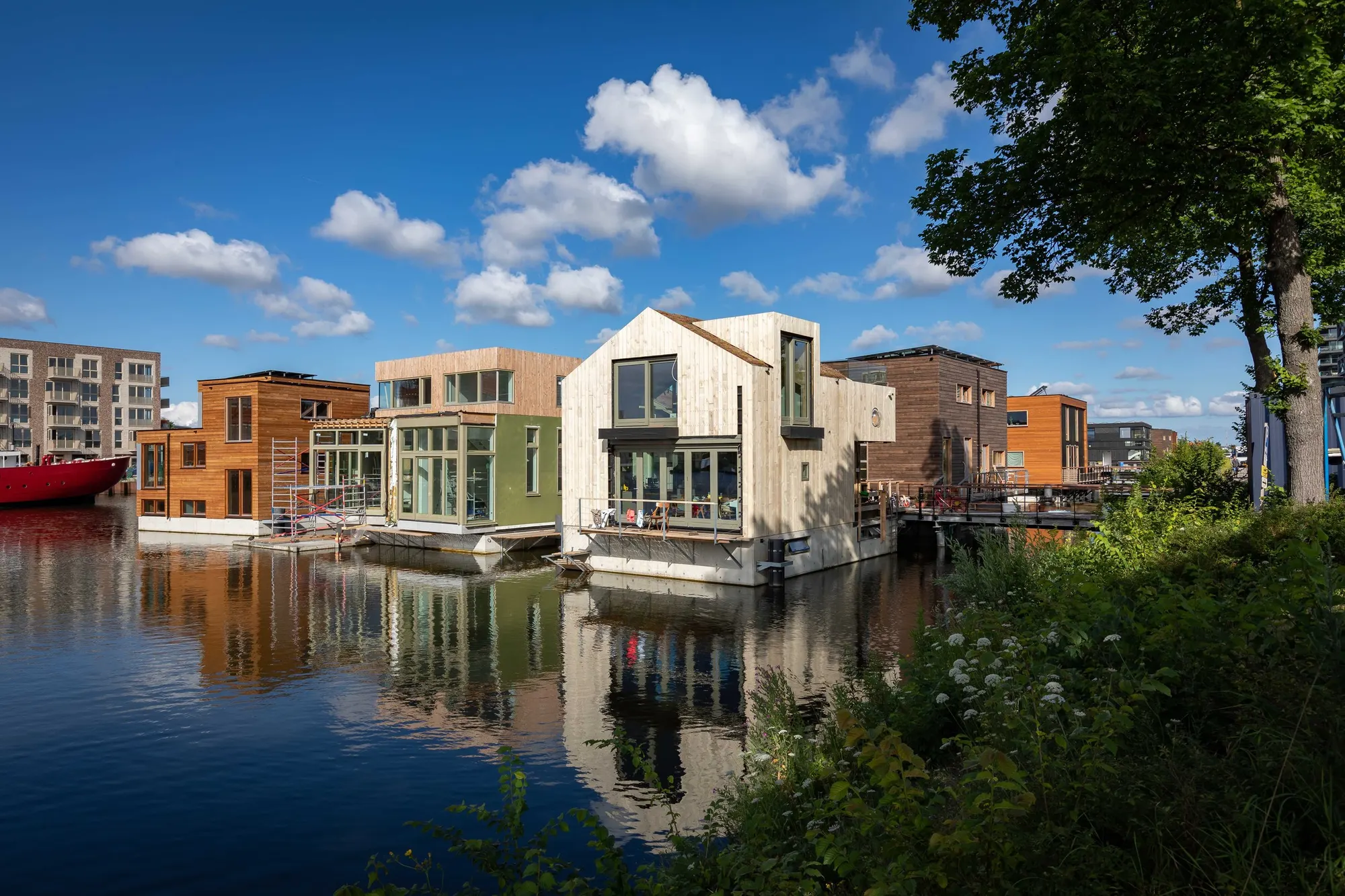
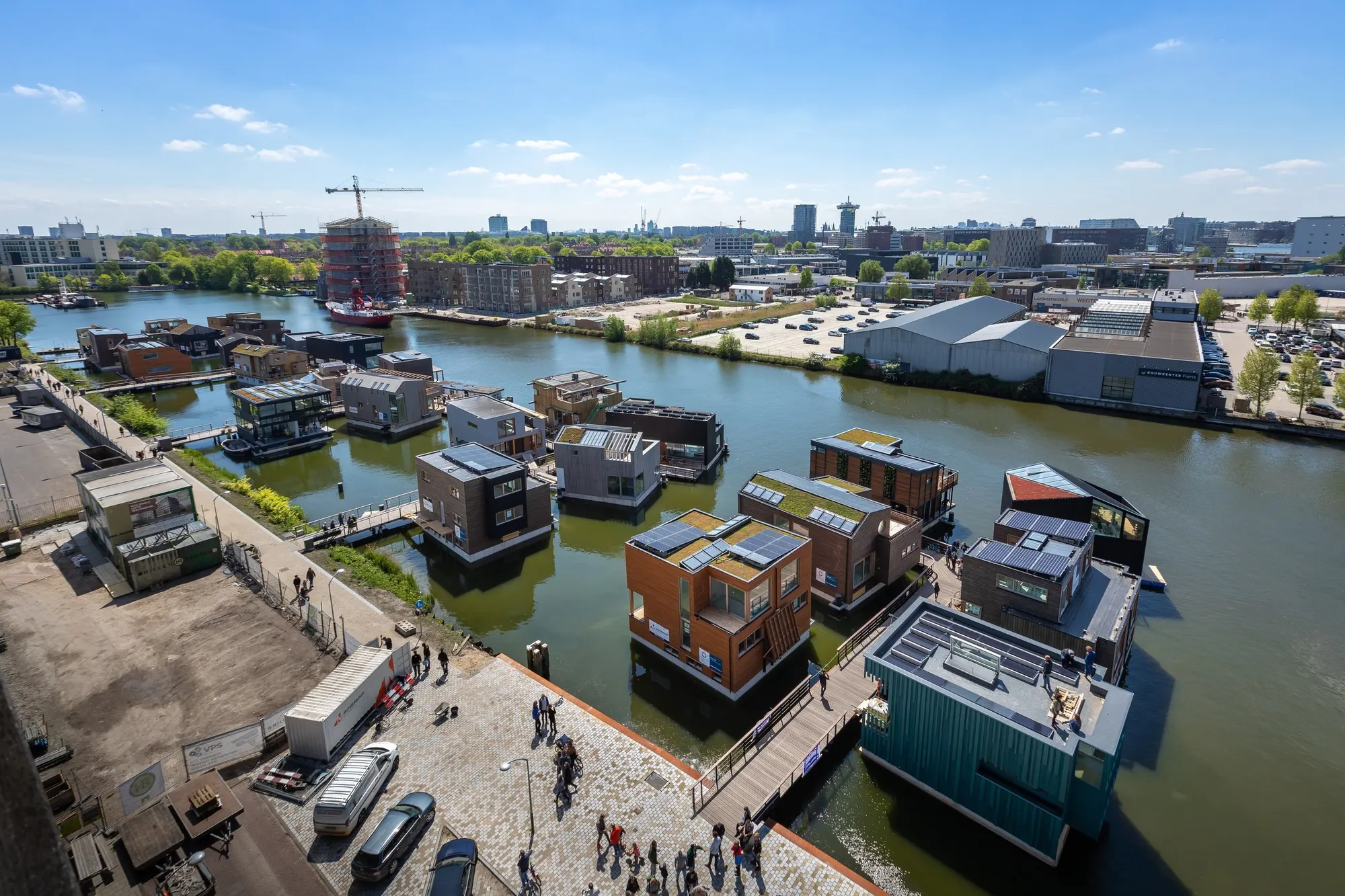
The idea dates from 2008. Filmmaker Marjan de Blok interviewed Pauline Westendorp, who lived on an energy-independent houseboat, and wondered whether a whole neighbourhood could live that way. Thomas Sykora joined her that same evening. In 2009, a grant from the Dutch housing experiments programme and a loan from the province of North Holland paid for the first studies. Finding a stretch of water took two years: in 2010 the group set its sights on the Johan van Hasseltkanaal in Buiksloterham, a former shipyard district in transition.
In October 2013, Schoonschip won the Amsterdam-Noord borough tender. The firm Space&Matter drew the masterplan and a “plot passport” for each parcel; each household then chose its own architect and builder. The houses were built off site and towed in. The first arrived in December 2018, the first residents moved in in March 2019 and the last ark was delivered in January 2020. Fifteen arks carry two homes each, and one holds the shared space.
The power grid sets the neighbourhood apart. In 2016, the Ministry of Economic Affairs granted an experimental exemption from the Energy Act: the neighbourhood may run its own private grid behind a single public meter. About 500 solar panels, one heat pump per house drawing on the canal water and one battery per house are connected to it. Residents trade electricity through Spectral’s platform, and Fraunhofer ITWM manages the batteries. Since January 2025 the neighbourhood has sold up to 100 kilowatts of flexibility on the power markets, which can bring in several thousand euros a quarter according to Fraunhofer. It remains connected to the grid, which it needs in winter.
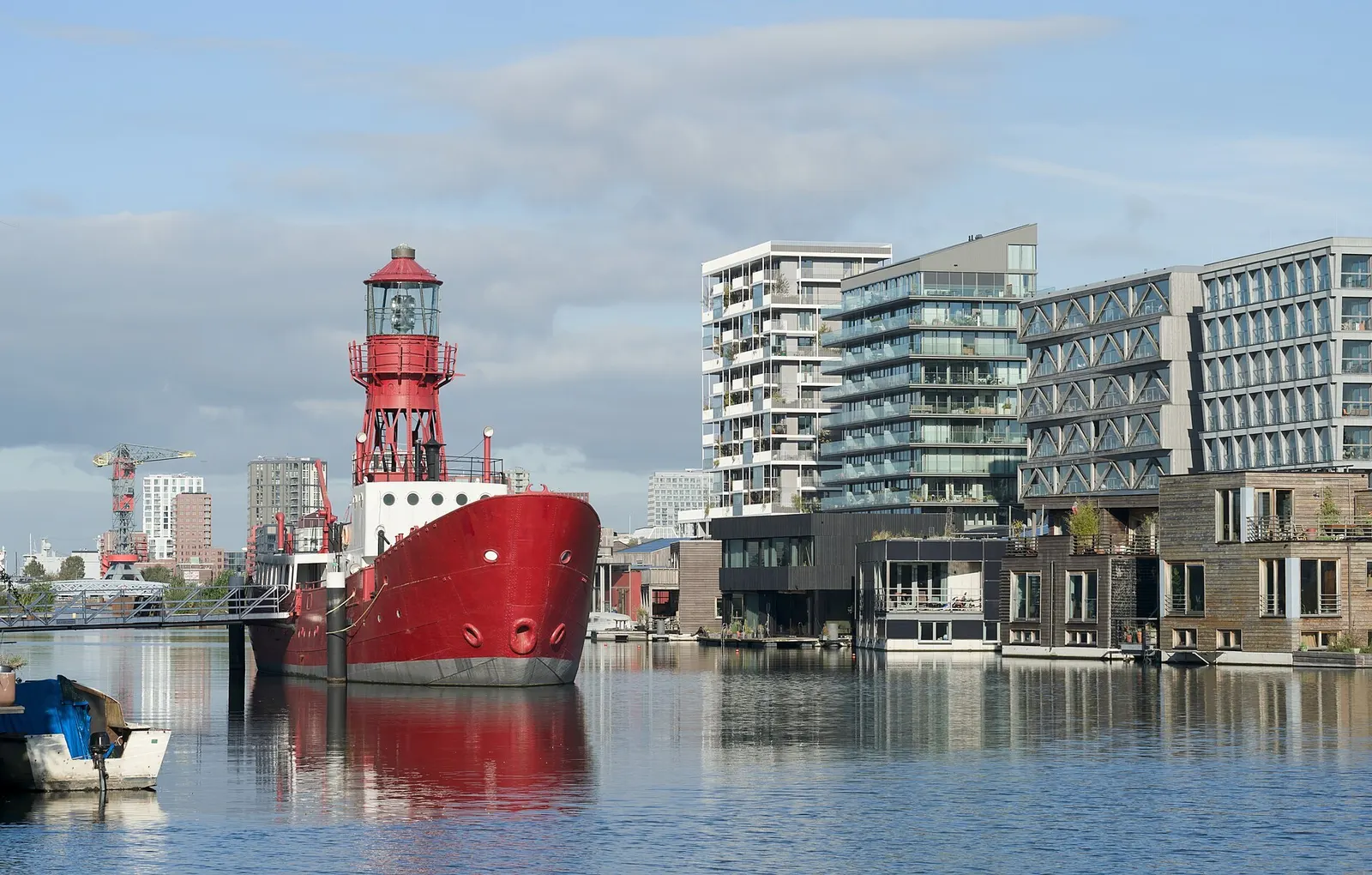
Grey water and black water are collected separately, through a vacuum system for the toilets. The project’s website describes a pilot with Waternet, Amsterdam’s water utility: black water is to go through a digester to produce biogas and recover phosphate. Residents also share electric cars and cargo bikes, and at least a third of the roof area is planted.
The model has a cost. Without a developer, the residents carried the project themselves, and it took more than ten years. The residents keep an open-access “Greenprint” that sets out their choices.
For a team, the visit is led by residents, since the jetties are private; it is booked through the association. You see the smart jetty that carries cables and pipes, the heat pumps, the roofs and the variety of the houses, and you discuss what matters to any organisation: how a group of residents wins an exemption, finances a shared grid and makes decisions over more than ten years. The quay is public.
46 households on 30 floating arks, more than 100 residents. A single connection to the national grid thanks to a 2016 exemption. About 500 solar panels, one heat pump and one battery per house. Up to 100 kW of flexibility sold on the markets since January 2025. More than ten years of work, from the 2008 idea to the last ark in January 2020.
Would you like to meet these people with your team? in:Expeditions designs tailor-made learning expeditions around places like this one.
What is a learning expedition?
Learning expedition: Paris, London and Amsterdam, reinventing places, from wasteland to port →

 Agent A\lex