Ljubljana sorts close to 70% of its waste and is still looking for somewhere to burn the rest
“
In 2013 Snaga, Ljubljana’s public waste company, cut residual waste collections and showed journalists that the overflowing bins were full of recyclables. A year later the city dropped its incinerator plan and adopted a zero waste strategy. Today it sorts 68.3% of its waste, a rate that has stopped rising, and struggles to dispose of the fuel made from what is left.
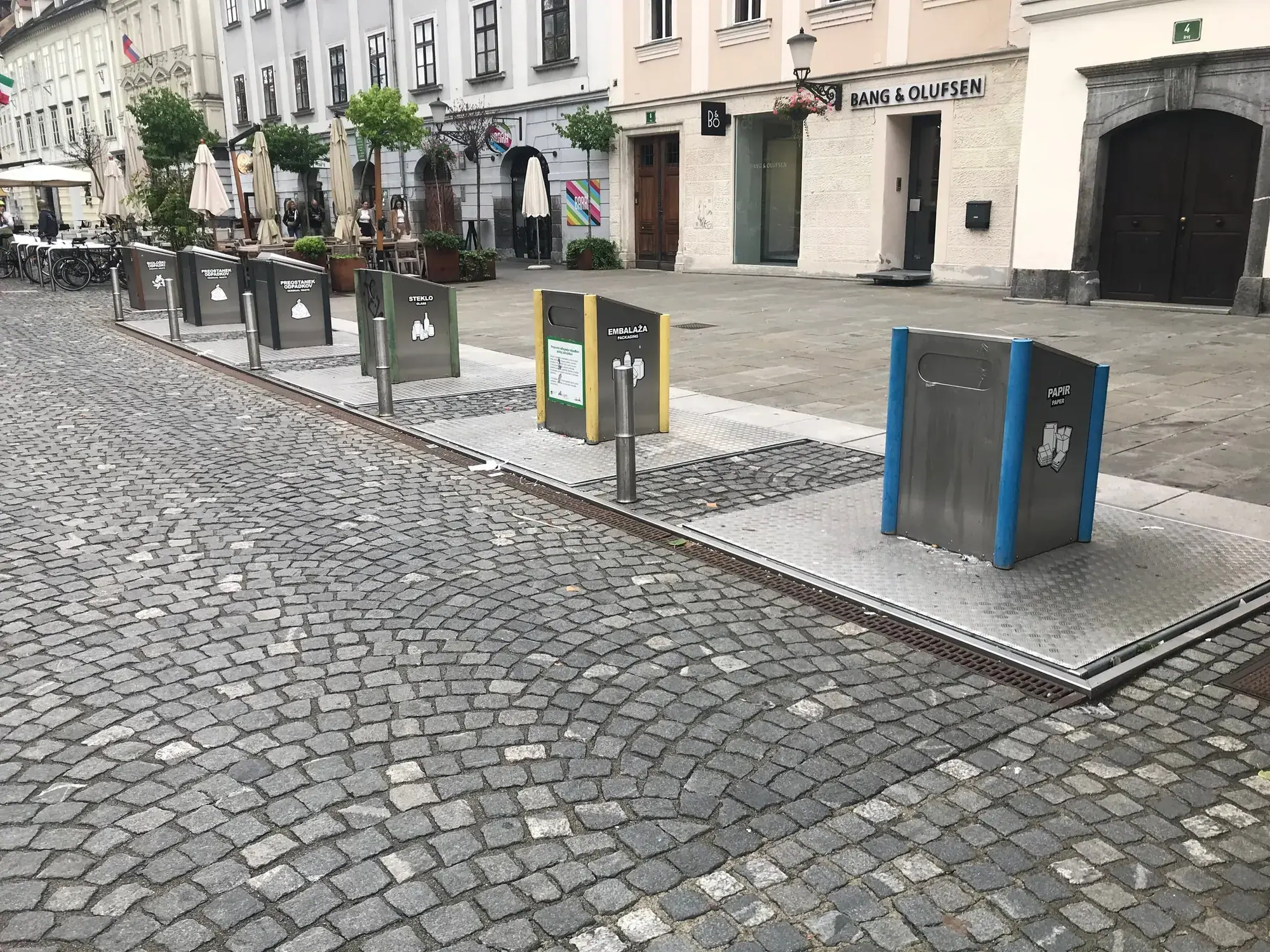
In 2002 Ljubljana started sorting: paper, glass and packaging went into kerbside “eco islands”, and the rest was collected at the door. In 2006 Snaga, the public company that collects waste in the capital and ten neighbouring municipalities, added biowaste. Residents ignored the new bins, for lack of explanation. The country planned two incinerators; the first, at Kidričevo, was abandoned in 2005 in the face of local opposition. The Barje landfill, south of the city, was filling up. In 2012 Ljubljana announced an incinerator of its own, linked to district heating, at a time when it already recycled 45% of its waste.
Snaga first tried something else in Brezovica, a small suburban municipality, in 2011: paper and packaging were collected at the door, like biowaste. Within months packaging recycling tripled and residual waste fell by 29%. The system was rolled out in Ljubljana. In 2013 Snaga took the unpopular decision: in areas of detached houses, the black bin was emptied only once every three weeks, while recycling and biowaste bins kept their schedule. Complaints poured in and black bins overflowed. Snaga then organised a visit for journalists: the black bins were full of recyclables, and once these were taken out, what really belonged in the black bin took up far less room. Local and national media began to echo the call to sort. By November 2013 separate collection had reached 55%.
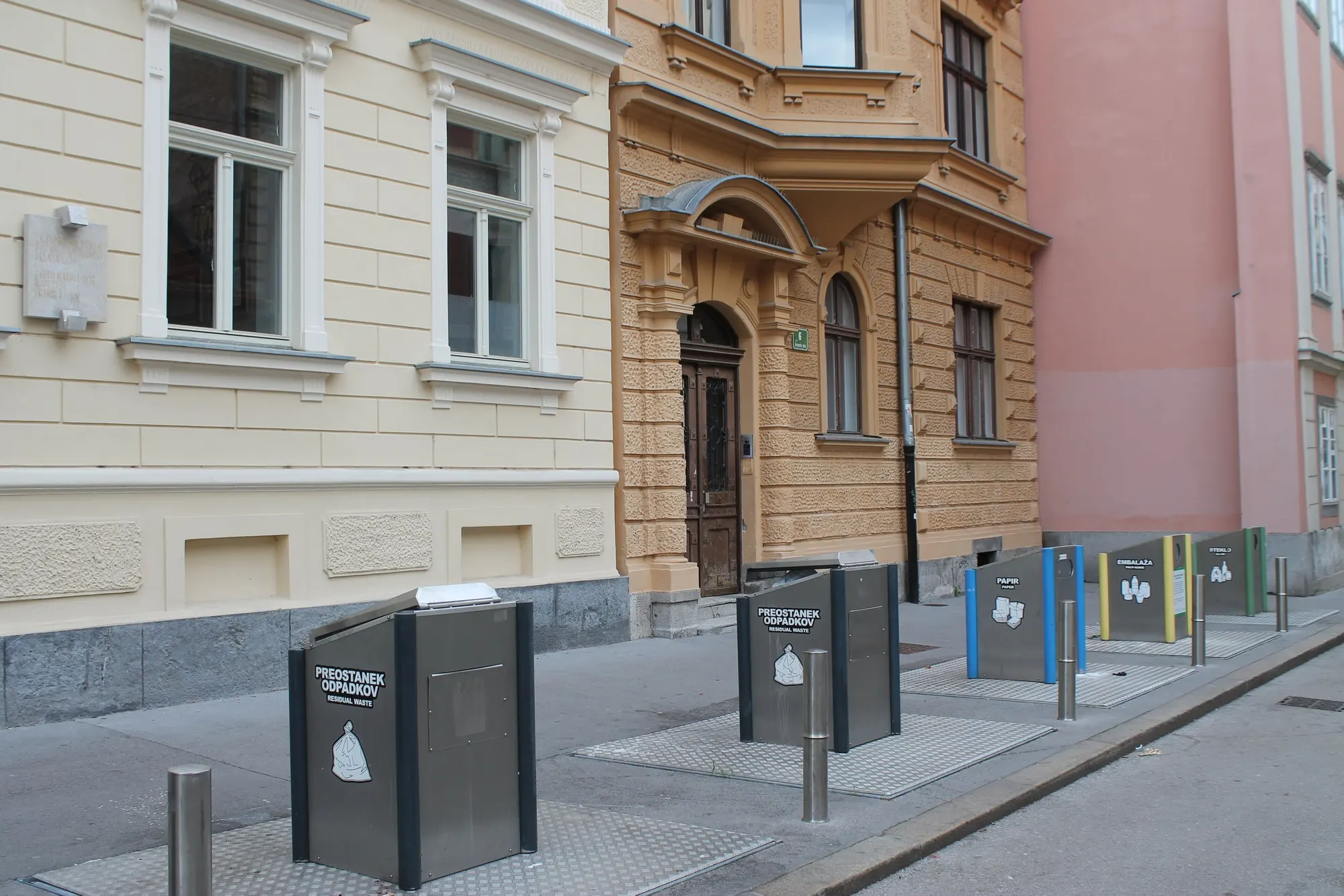
Pricing follows the same logic. In the centre, Snaga began moving its containers underground in 2012: the recycling bins are open to all, while those for biowaste and residual waste open with a card given free to every resident, which counts the bags. According to the EBRD, a residual waste bin costs six times as much as a biowaste bin. In 2018 a Ljubljana household paid on average 8.20 euros a month for its waste, against a Slovenian average of 150 euros a year. Meanwhile, in September 2014, the city dropped the incinerator and adopted a zero waste strategy. It became the first capital in the Zero Waste Europe network, then European Green Capital in 2016, the only finalist with neither an incinerator nor plans to build one.

In 2018, according to Zero Waste Europe’s case study, each resident produced 358 kg of waste a year, 31% below the EU average, and 68% of it was recycled or composted; landfilling had fallen by 95% since 2004. At the first reuse centre, opened at the end of 2013, 75 items changed hands every day in mid-2014, and 150 in 2018. Since then the curve has flattened. The 2024 annual report of Voka Snaga, the company’s current name, which also runs the water supply, gives a separate collection rate of 68.3% for 2024, against 70.4% in 2023, below the year’s 69% target and far from the 78% aimed for in 2025. Each resident still throws away 112 kg of residual household waste a year; the strategy aimed for 60 by 2025.
What is not sorted goes to RCERO, the regional treatment centre built on the Barje site for 155 million euros, with the EU Cohesion Fund, the state and the city. Since November 2015 its mechanical and biological plants have pulled paper, plastics and metals out of mixed waste and turned biowaste into biogas and compost. On 20 March 2024 the centre passed one million tonnes of mixed waste treated; Voka Snaga was glad to have reached the mark as late as possible, thanks to sorting. In 2024 it took waste from 56 municipalities: 13,710 tonnes of materials recovered, 2,296 tonnes of compost delivered, 24,856 tonnes landfilled and 79,380 tonnes turned into fuel. That fuel is the weak point of the model. The report describes a critical shortage of capacity to burn it in 2024, and a sharp rise in the prices charged to take it. As early as 2017, Janko Kramžar, then Snaga’s director, told the daily Delo that he paid 60 to 90 euros a tonne to produce it, hoping it would sell in ten or fifteen years, when energy would cost more. Voka Snaga is now studying a heat and power from waste project, called TEO, with Energetika Ljubljana.
RCERO stands at Cesta dveh cesarjev 101, south of the centre. Voka Snaga holds open days there, with a guided tour every hour, helmets and vests provided; groups of more than ten people register in advance. A visit on another date, or a meeting with the team in charge of the zero waste strategy, has yet to be requested. In town, a team can see the underground containers of the old centre and the colour-coded bins outside houses. For a leadership team, Ljubljana raises three questions: how a tariff changes a daily habit, what transparency costs when an unpopular service is challenged, and what to do with the share that cannot be recycled.
Ljubljana’s separate collection rate rose from 55% at the end of 2013 to 68.3% in 2024 (Voka Snaga, 2024 annual report). By 2018 landfilling had fallen by 95% since 2004 (Zero Waste Europe). The RCERO centre treated its millionth tonne of mixed waste on 20 March 2024.
Photos: Miha Peče, Wikimedia Commons (CC BY-SA 4.0: 1) ; John Samuel, Wikimedia Commons (CC BY-SA 4.0: 2) ; Antimuonium, Wikimedia Commons (CC BY-SA 4.0: 3) ; Viktar Palstsiuk, Wikimedia Commons (CC BY-SA 4.0: 4) ; Ajznponar, Wikimedia Commons (CC0: 5).
Would you like to meet these people with your team? in:Expeditions designs tailor-made learning expeditions around places like this one.
 Or design it yourself with Agent A\lex →What is a learning expedition? →Learning expedition: Vienna, the landlord city →