Oslo reopens the Hovinbekken
“
In the late nineteenth century the Hovinbekken, by then an open sewer, was shut away in pipes beneath Oslo. Since the early 2010s the city has been reopening it stretch by stretch: a kilometre and a half through the new Ensjø district, then Jordal and Klosterenga. The stream now holds back storm water, and it is clean enough for children to play in.
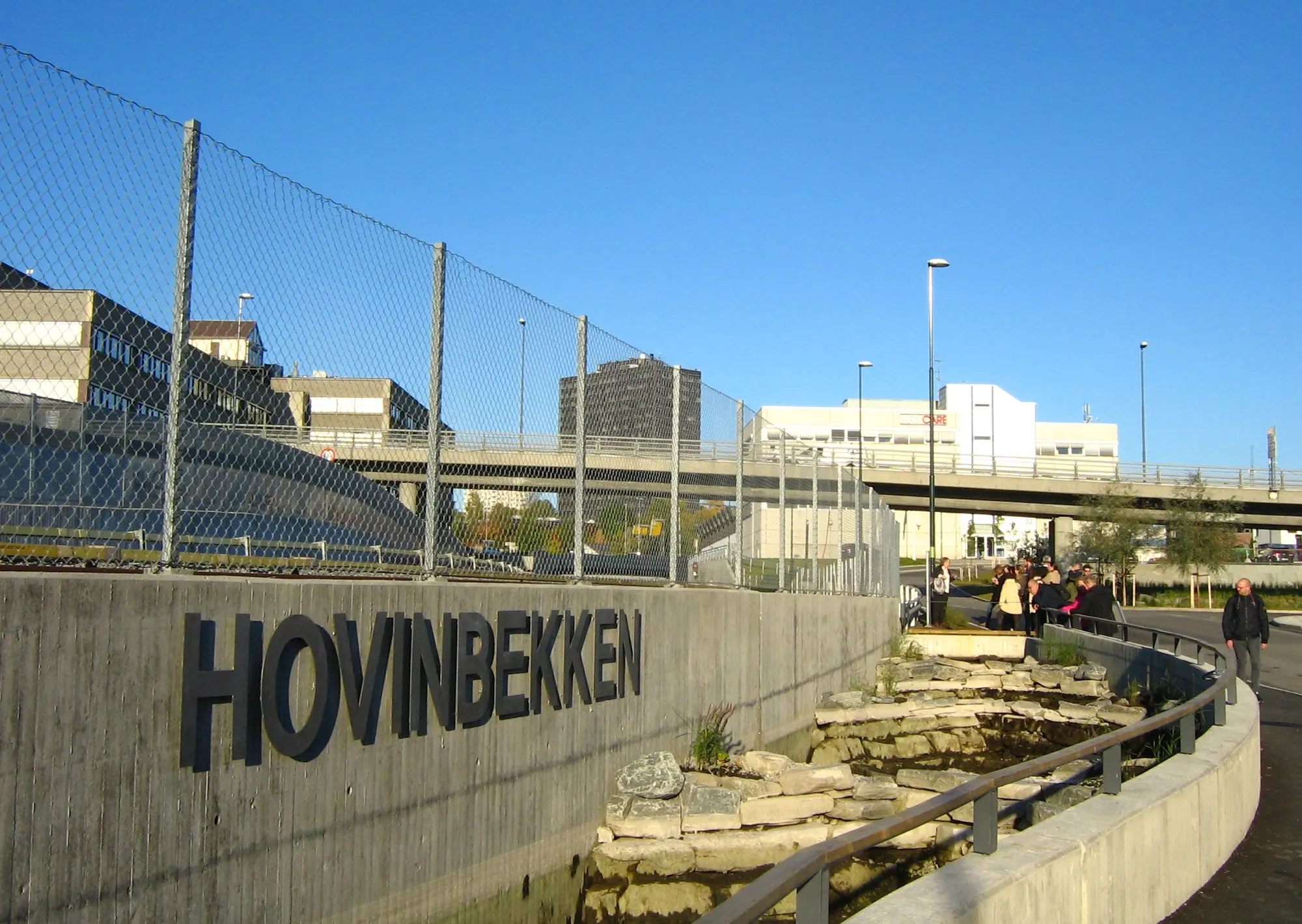
The Hovinbekken rises 295 metres above sea level in the hills of north-east Oslo and runs for about 11 kilometres. In the nineteenth century, industry and a growing population turned it into a sewer. In 1897 eleven property owners on Hølandsgata wrote to the city authorities that “the so-called Haavibekk spreads an unbearable stench”. Funds to vault it over were approved in 1899. At Ensjø it had already gone underground in 1879; at Klosterenga it followed in the 1920s.
The pipes solved the smell and erased the stream. By flow, the Hovinbekken is Oslo’s fourth-largest watercourse, and it was the most heavily buried. Yet water in the open can spread out and slow down during downpours, and sunlight and oxygen help clean it. The City of Oslo has therefore set itself a political goal: to reopen, wherever possible, the streams and rivers put underground over the past 150 years, to cope with heavier rain, improve water quality and make the city greener.
The first visible stretch runs through Bjerkedalen park at Økernbråten: 300 metres of waterfalls and rapids over a 16-metre drop, built by the city and awarded Oslo’s architecture prize in 2015. In 2015 the Teglverksdammen pond opened between Hasle and Hovin, on the site of a former brickworks. Together with the neighbouring Grensedammen it is designed to clean the water, and pools and spawning gravel are meant to bring back trout.
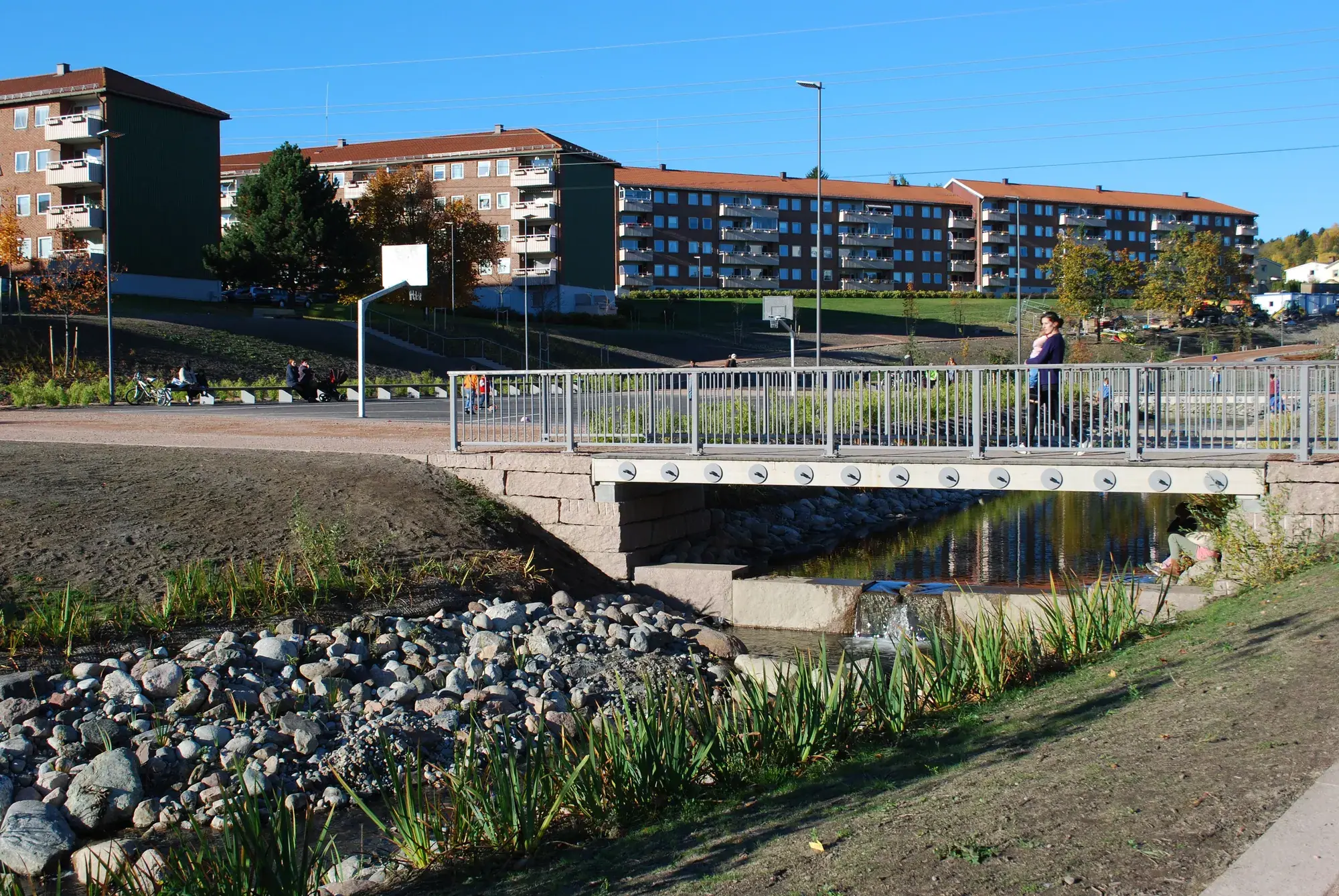
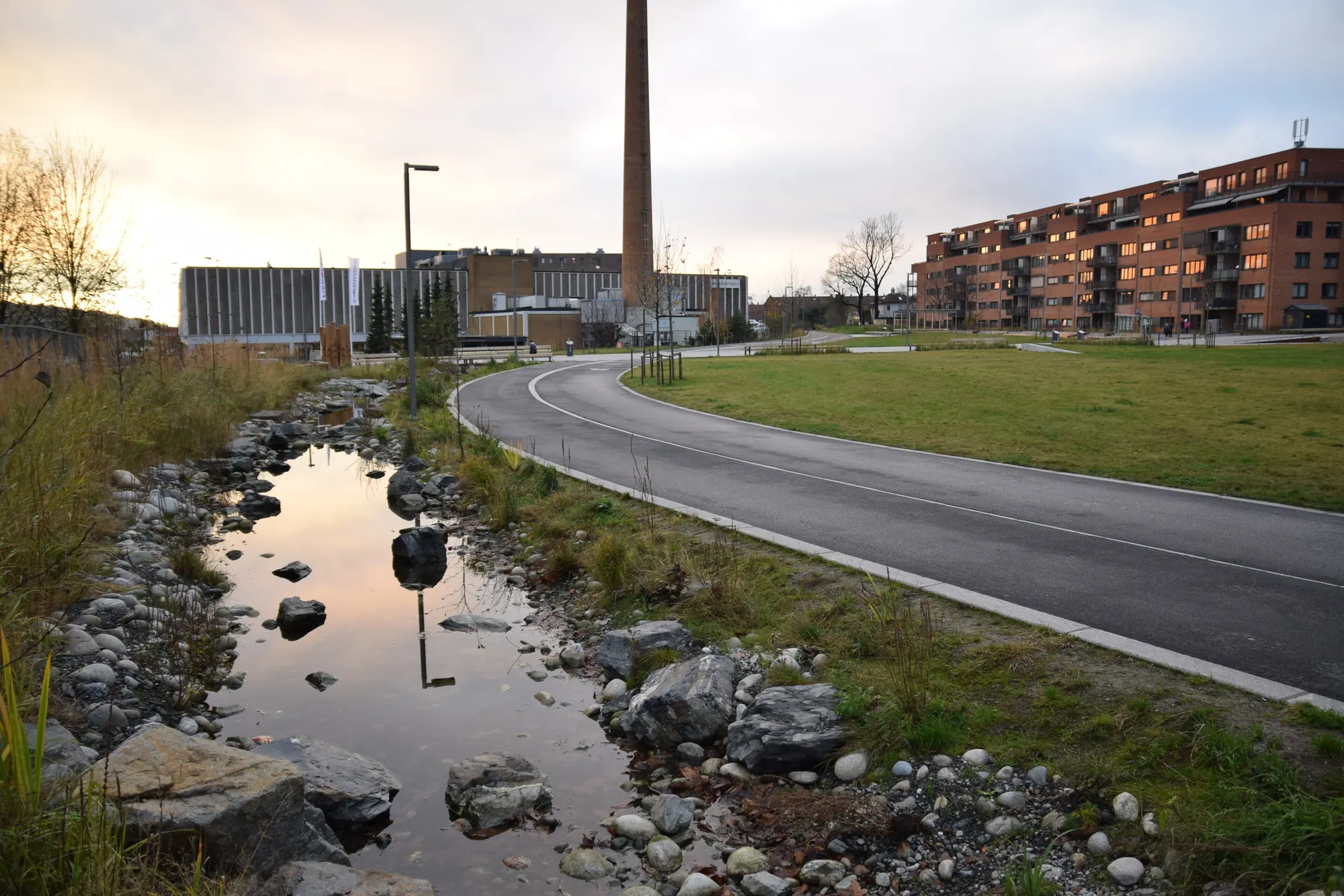
The main project followed the construction of Ensjø, a district built over some fifteen years. Between the Hasle and Ensjø metro stations, the landscape architects Bjørbekk & Lindheim reopened 1.5 kilometres of stream within 65,000 m² of parks and public space. Along Gladengveien it runs between the pavement and the road, lined with plants usually found in the wild. The shared spaces were funded through agreements with the district’s private developers; the municipality carried out the work.
In 2023 this stretch won the City of Oslo’s architecture prize. The jury noted that the water is clean enough to play in, that the path beside it is a safe route to school, and that the stream helps manage storm water and protect against flooding. Further down, 550 metres were reopened at Jordal in autumn 2020, around the new Jordal Amfi arena, using Norwegian stone from Iddefjord, Røyken and Larvik. In summer 2023 the stream came back to the surface at Klosterenga, where it becomes a 700-metre artwork based on designs by the sculptor Bård Breivik.
For a team, the visit is on foot and needs no booking: the parks are public and the prize-winning stretch links two metro stations, Hasle and Ensjø. From the Teglverksdammen pond to the planted edges of Gladengveien, it shows what a stream returned to the city changes: ponds, a route to school, wild planting at the foot of new apartment blocks.
Buried in stages between 1879 and the 1920s, the Hovinbekken, Oslo’s fourth-largest watercourse by flow, now runs in the open for about three kilometres in total: 300 metres in Bjerkedalen park, 1.5 kilometres between Hasle and Ensjø, 550 metres at Jordal since autumn 2020 and 700 metres at Klosterenga since summer 2023. The Ensjø stretch sits within 65,000 m² of parks and public space; it won the City of Oslo’s architecture prize in 2023, and Bjerkedalen park won it in 2015.
Photos: Helge Høifødt, Wikimedia Commons (CC BY-SA 4.0, CC BY-SA 3.0: 1 2 4) ; Panek, Wikimedia Commons (CC BY-SA 4.0: 3) ; Ole Anders Flatmo, Wikimedia Commons (CC BY-SA 4.0: 5).
Would you like to meet these people with your team? in:Expeditions designs tailor-made learning expeditions around places like this one.
 Or design it yourself with Agent A\lex →What is a learning expedition? →Learning expedition: Oslo, the carbon budget →