Copenhagen’s Climate Quarter holds back the storms
“
On 2 July 2011, 135 millimetres of rain fell on central Copenhagen. Basements flooded and insurers paid out more than 6 billion Danish kroner. The city then picked a neighbourhood in Østerbro to test its answer: squares, streets and courtyards planted to hold water on the surface and carry it down to the harbour.
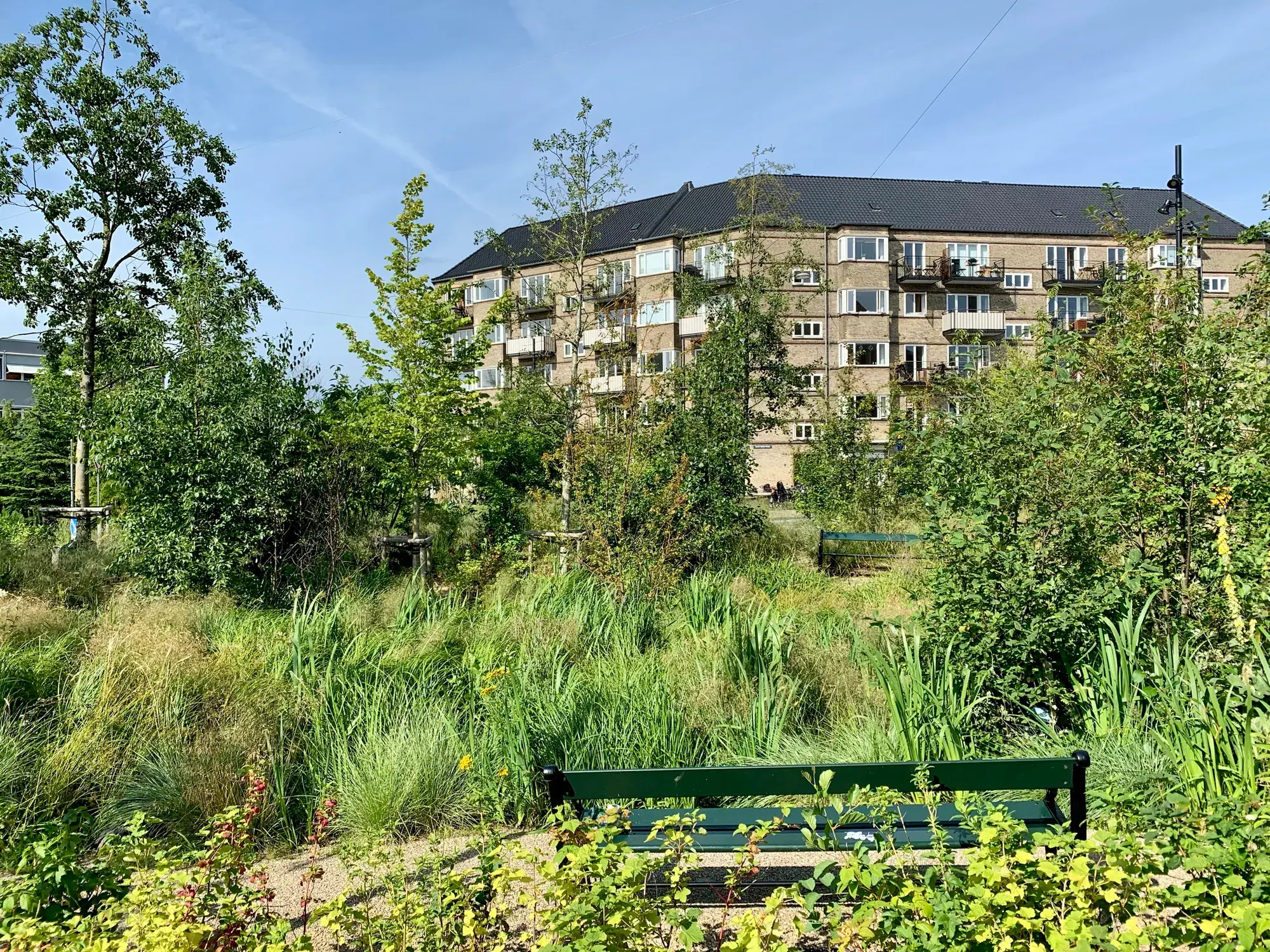
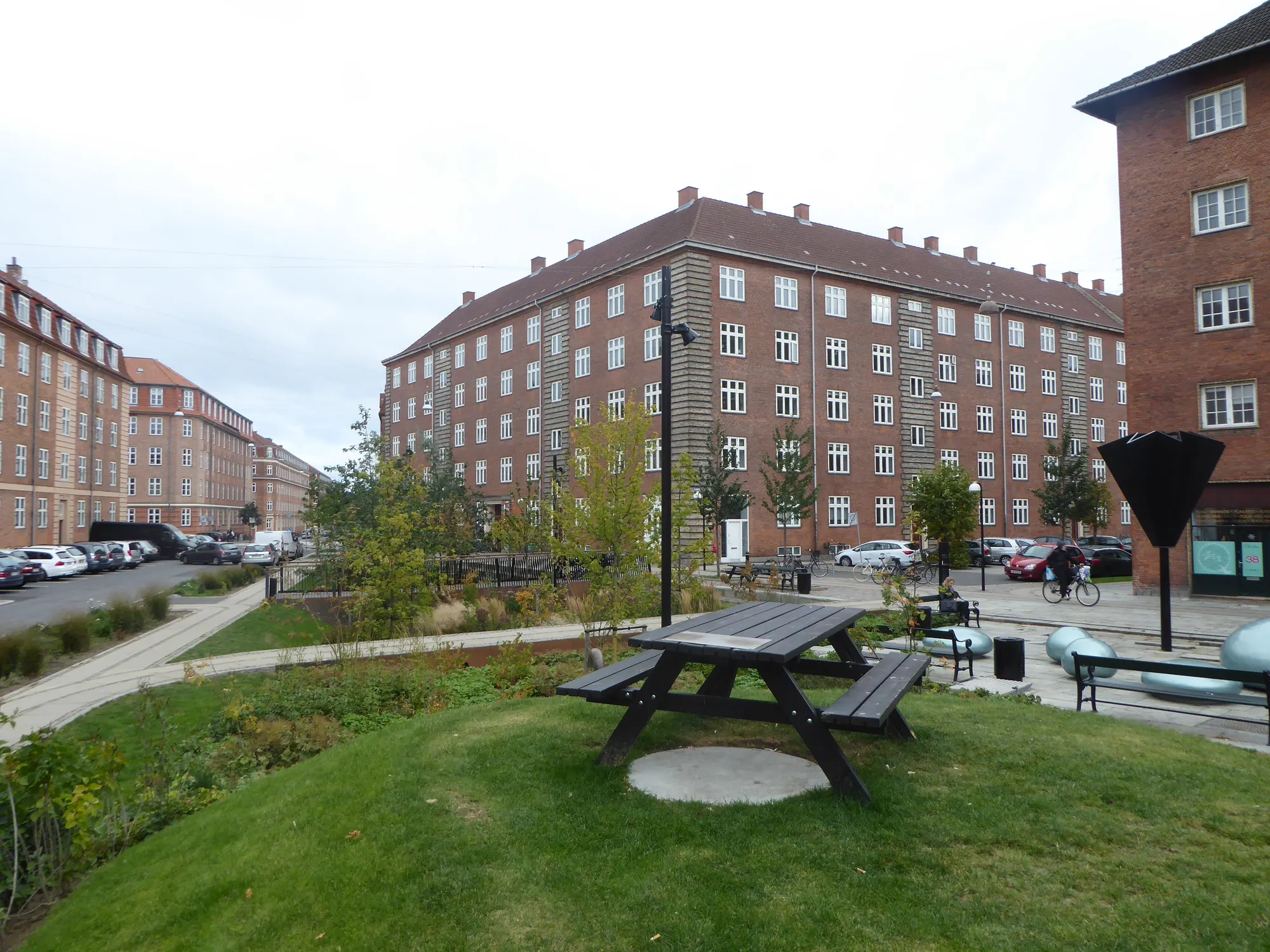
That evening, at around 7 pm, a storm of unprecedented violence broke over the Danish capital. The rain gauge at the Botanical Garden recorded 135 millimetres, a record for the city. Roads and railway lines were cut. The Danish insurance federation put insured damage at more than 6 billion kroner. Copenhagen’s sewer system is old, and the city concluded that enlarging it would cost too much.
The answer took shape in the Sankt Kjeld neighbourhood of Østerbro, designated Copenhagen’s first climate-resilient neighbourhood. The city, the utility HOFOR, the Østerbro Environmental Centre and residents set a double goal: make it the greenest of the inner-city districts and prepare it for the downpours to come. The methods tested here are meant to serve the rest of the city, to be adapted over twenty years.
The first project completed, Tåsinge Plads, opened on 6 December 2014, the year Copenhagen was European Green Capital. The landscape architects GHB turned 1,000 m² of unused asphalt into a “Danish rainforest”. More than 7,500 m² of roadway no longer drains into the sewers. Rain from the roofs runs under the street into a tank beneath sculptures shaped like drops, where children can pump it up to play.

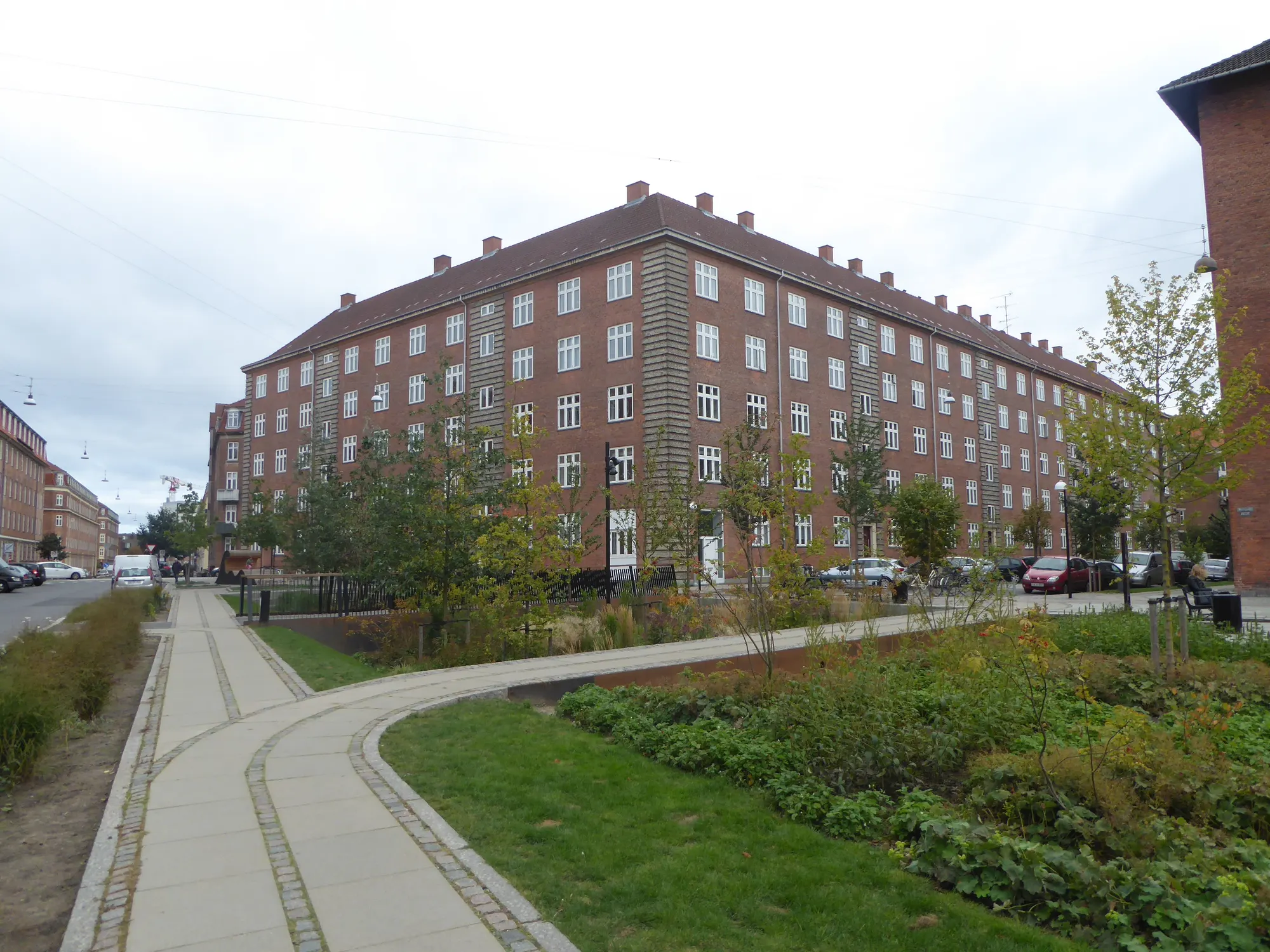
Before the works, residents tried the square out. In summer 2012 they made it “wild on purpose” with temporary installations and held Saturday breakfasts for neighbours. For the neighbouring square, public meetings, workshops and project groups have followed one another since 2012. “It is important that the residents are involved in the process of developing the urban space. As a result, a more site-specific urban space is created that is adapted to the specific conditions and the life there is in the area,” says Louise Molin Jørgensen, project leader at the area renewal unit.
That square, Sankt Kjelds Plads, used to be a busy traffic junction. The 2015 competition was won by SLA, with the consultancy Alectia and the engineer Jens Rørbech. Together with Bryggervangen street, the project covers 34,900 m² on a budget of 48.45 million kroner. Two thirds of the asphalt, 9,000 m², became planted beds with 586 trees of 48 local species, modelled on the marshes and woods around the city. Thirty per cent of the rain is managed on the surface; in a cloudburst the surplus runs along “cloudburst roads” and pipes to the harbour.
Both squares are public, a few streets apart, and easy to walk. In an hour a team can see what climate adaptation changes in a neighbourhood: less asphalt, benches under the trees and, according to SLA, new cafés and shops around the square. In 2020 the project won Årets Arne, the annual prize of the Danish Association of Architects.
After the 2011 storm, which cost insurers more than 6 billion kroner, Copenhagen had more than 300 climate adaptation projects by 2019. In the Østerbro climate neighbourhood, Tåsinge Plads has disconnected more than 7,500 m² of roadway from the sewers and returned 1,000 m² of asphalt to planting. Sankt Kjelds Plads and Bryggervangen have replaced 9,000 m² of asphalt with 586 trees of 48 species, 3,000 m² of perennials and 500 m² of wild grasses; 30% of rainwater there is managed on the surface.
Photos via Wikimedia Commons: Orf3us (CC BY-SA 4.0: 1 2 5) ; Leif Jørgensen (CC BY-SA 4.0: 3 4).
Would you like to meet these people with your team? in:Expeditions designs tailor-made learning expeditions around places like this one.
 Or design it yourself with Agent A\lex →Learning expedition: Copenhagen, learning to play as a team →