Kalkbreite goes car-free
“
In Zurich, the Kalkbreite cooperative opened a building of homes, shops and offices in 2014, wrapped around a tram depot that is still in use. On the depot’s roof sits a 2,500 m² planted courtyard open to the neighbourhood. Its 250 residents commit to not owning a car and have 33 m² each on average, shared spaces included.
In 2006 local residents and professionals sketched a project, titled “A new piece of city”, for the Kalkbreite tram depot site, wedged between a railway cutting and two busy roads. The Kalkbreite cooperative was founded in 2007. The City of Zurich granted it the 6,350 m² site on a building lease, and the Zurich transport operator VBZ still parks its trams there: the depot hall was roofed over and the courtyard laid out on top, about nine metres above the tracks.
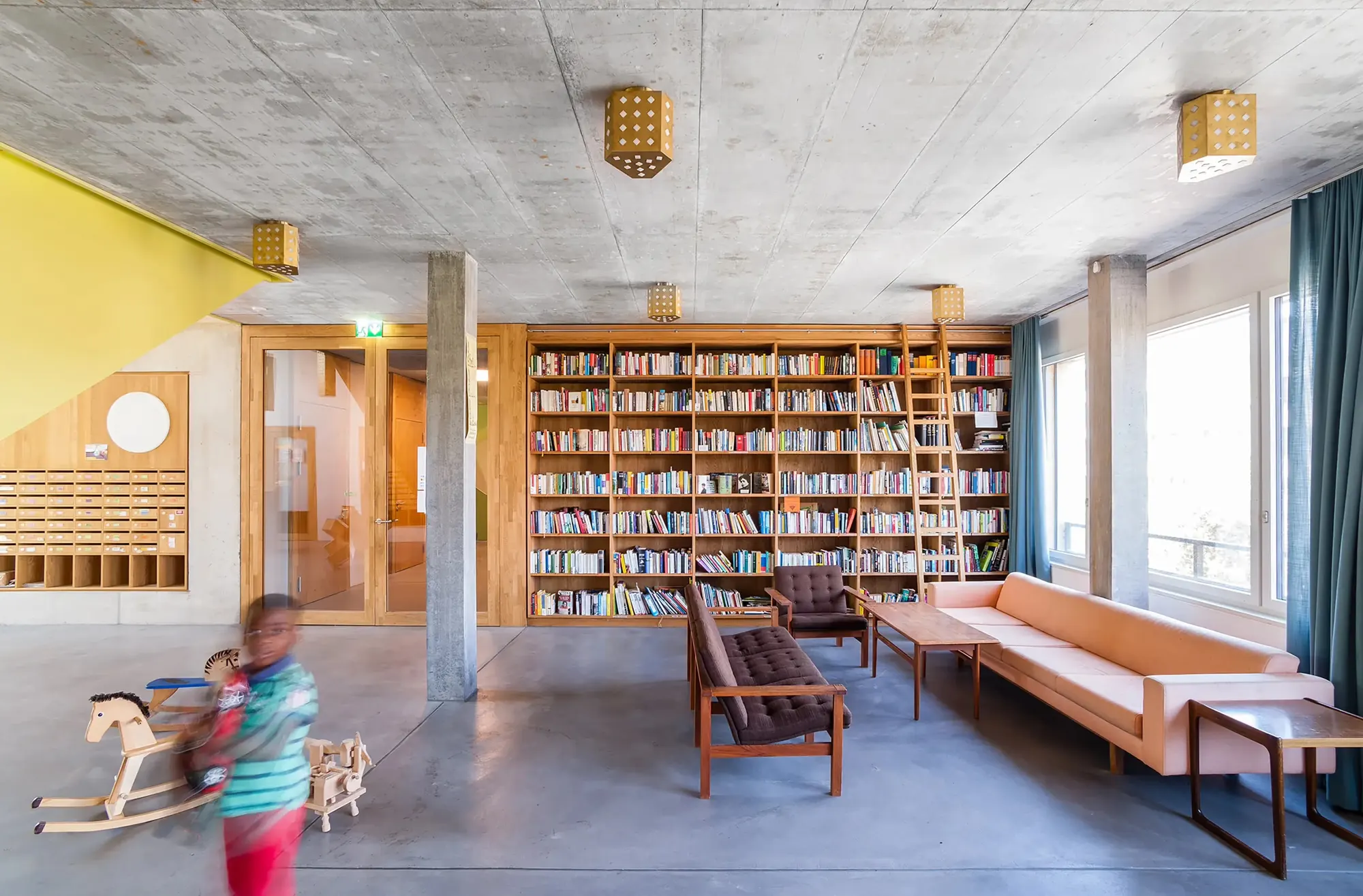
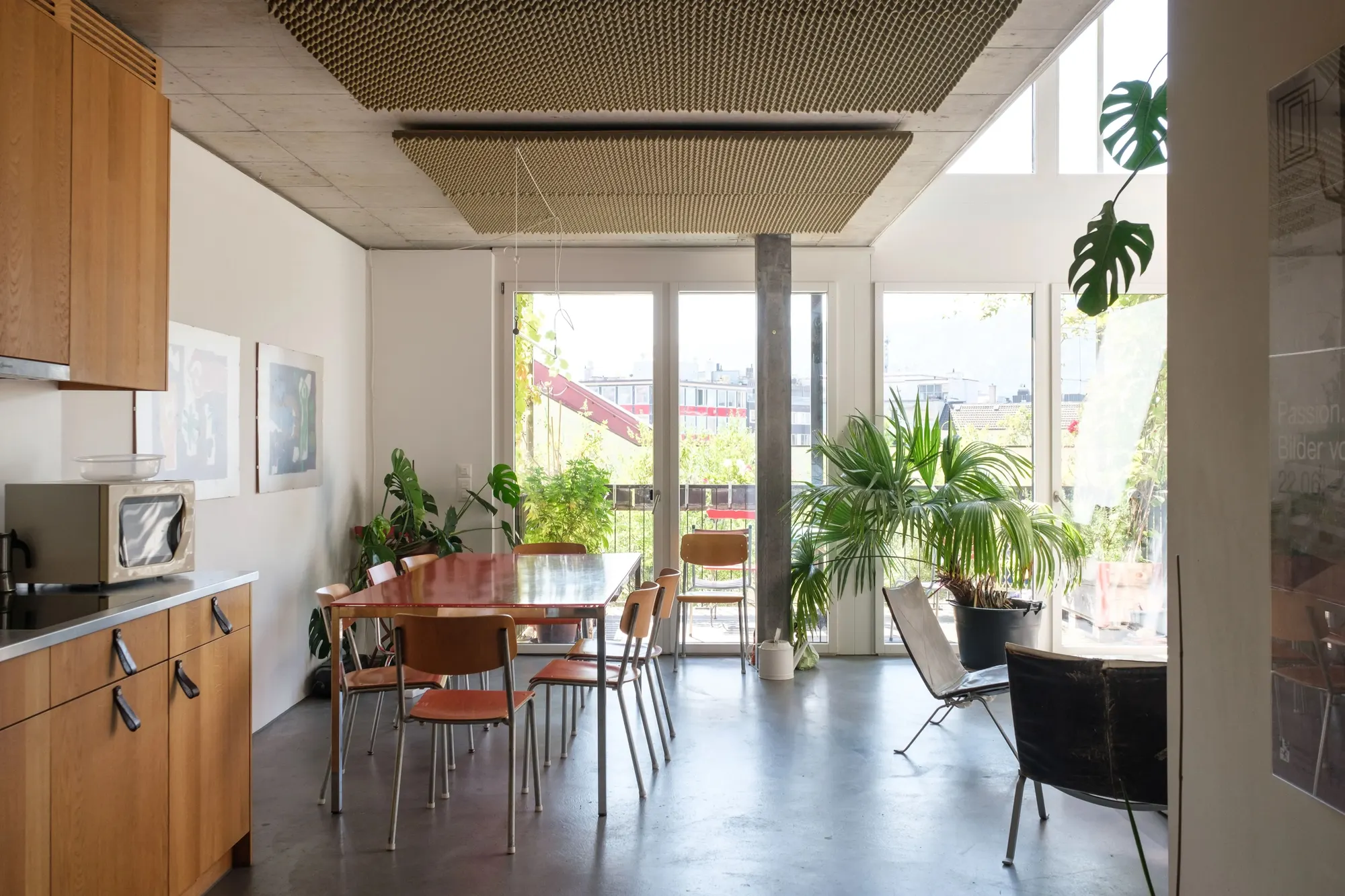
The building, designed by Müller Sigrist Architects, opened in 2014. Its top four floors hold 55 homes for 250 residents. Alongside family flats and shared flats there are “clusters”: small units grouped around a large shared living room and kitchen. A large household of about fifty people shares a communal kitchen. “Joker rooms” can be rented on top for up to three years, when a family grows. Rents are set at cost, without profit.
One rule governs space: a home must have at least as many occupants as rooms minus one. As a result each resident has 33.3 m² on average, shared spaces included; the 2014 project documentation put the Swiss average at 45 m². What isn’t used every day is shared: a library, workshops, a laundry, offices and meeting rooms to rent, guest rooms. In 2014 a 100 m² flat rented for around CHF 2,000 a month before service charges.

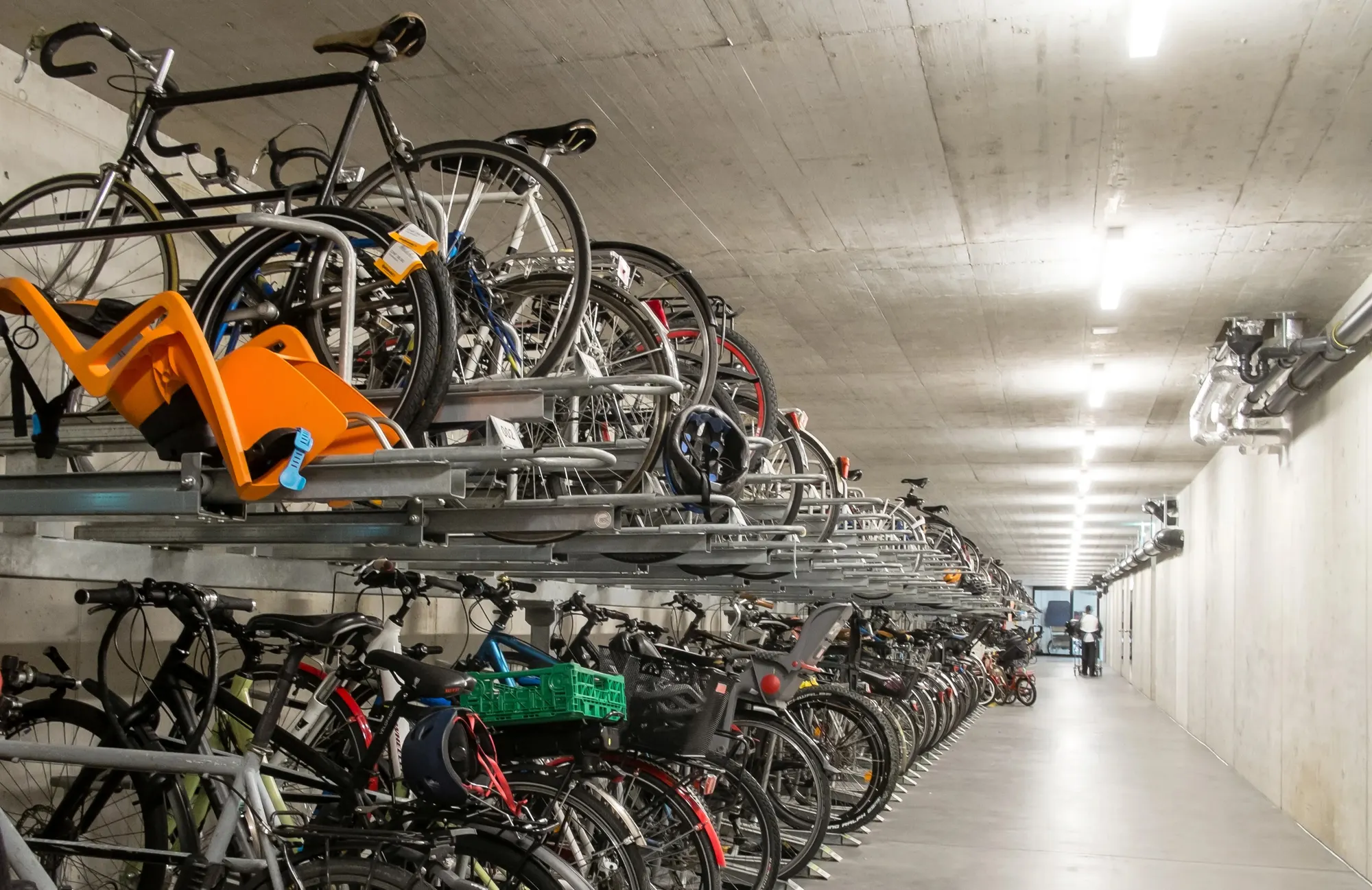
The second rule is about cars. Every tenant signs a declaration not to own, rent or use a car on a lasting basis, on pain of exclusion, unless for health or work reasons. Mandatory parking spaces were cut from 43 to 12. Instead of an underground car park the building has 300 ground-level bicycle spaces, and a mobility fund pays for shared e-bikes and trailers. Built to the Minergie-P-Eco standard, it is heated by a groundwater heat pump.
On the ground and first two floors, almost 5,000 m² house shops, restaurants, a cinema, a birth centre, medical practices and non-profits; the cooperative keeps out chains and big brands. “Actually, instead of an apartment we should live in grand hotels that we maintain ourselves,” cluster resident Fred Frohofer told Zurich Tourism.
The model has grown. In October 2020 the cooperative opened a second building, the Zollhaus, near the main station, and it is preparing a third project, Leepünt, in Dübendorf. At the end of 2025 it had 2,762 members. Its group tours are reserved for non-profit bodies, cooperatives and public authorities; a company can ask Müller Sigrist for an architecture tour, book the Flex meeting rooms or stay in one of the two guesthouses, which are open to all. The courtyard remains public.
On 6,350 m² granted by the city on a building lease, Kalkbreite has housed 250 residents in 55 homes since 2014, above a tram depot that is still in use. Each has 33.3 m² on average, shared spaces included, against a Swiss average of 45 m² cited by the project in 2014. Tenants give up cars: 12 parking spaces instead of the 43 required, and 300 bicycle spaces. The building cost CHF 62.5 million and won the Canton of Zurich architecture prize in 2016. The cooperative had 2,762 members at the end of 2025.
Photos: © Volker Schopp, Genossenschaft Kalkbreite (1 2 4) ; © Dimitri Djuric, Genossenschaft Kalkbreite (3) ; Micha L. Rieser, Wikimedia Commons (Attribution: 5).
Would you like to meet these people with your team? in:Expeditions designs tailor-made learning expeditions around places like this one.
 Or design it yourself with Agent A\lex →What is a learning expedition? →Learning expedition: Zurich, tarpaulin, concrete, CO₂ →