De Ceuvel cleans up a shipyard
“
On the north bank of the IJ in Amsterdam, a shipyard that closed in 2000 left behind soil laden with heavy metals. Since 2014, De Ceuvel has placed old houseboats there, converted into studios and linked by a boardwalk over a garden of soil-cleaning plants. The city wants the land back in early 2028; the community is pushing another plan.
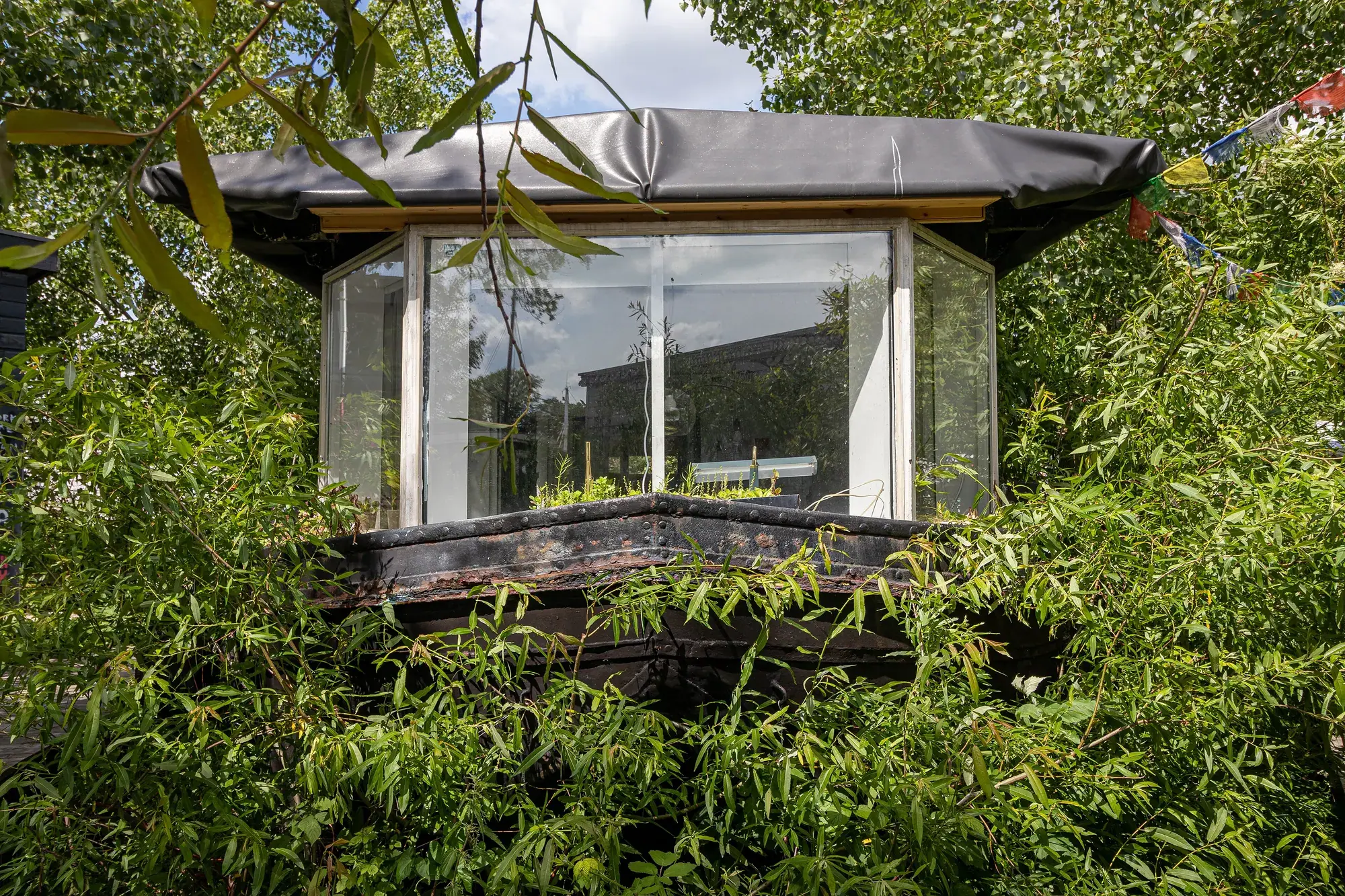
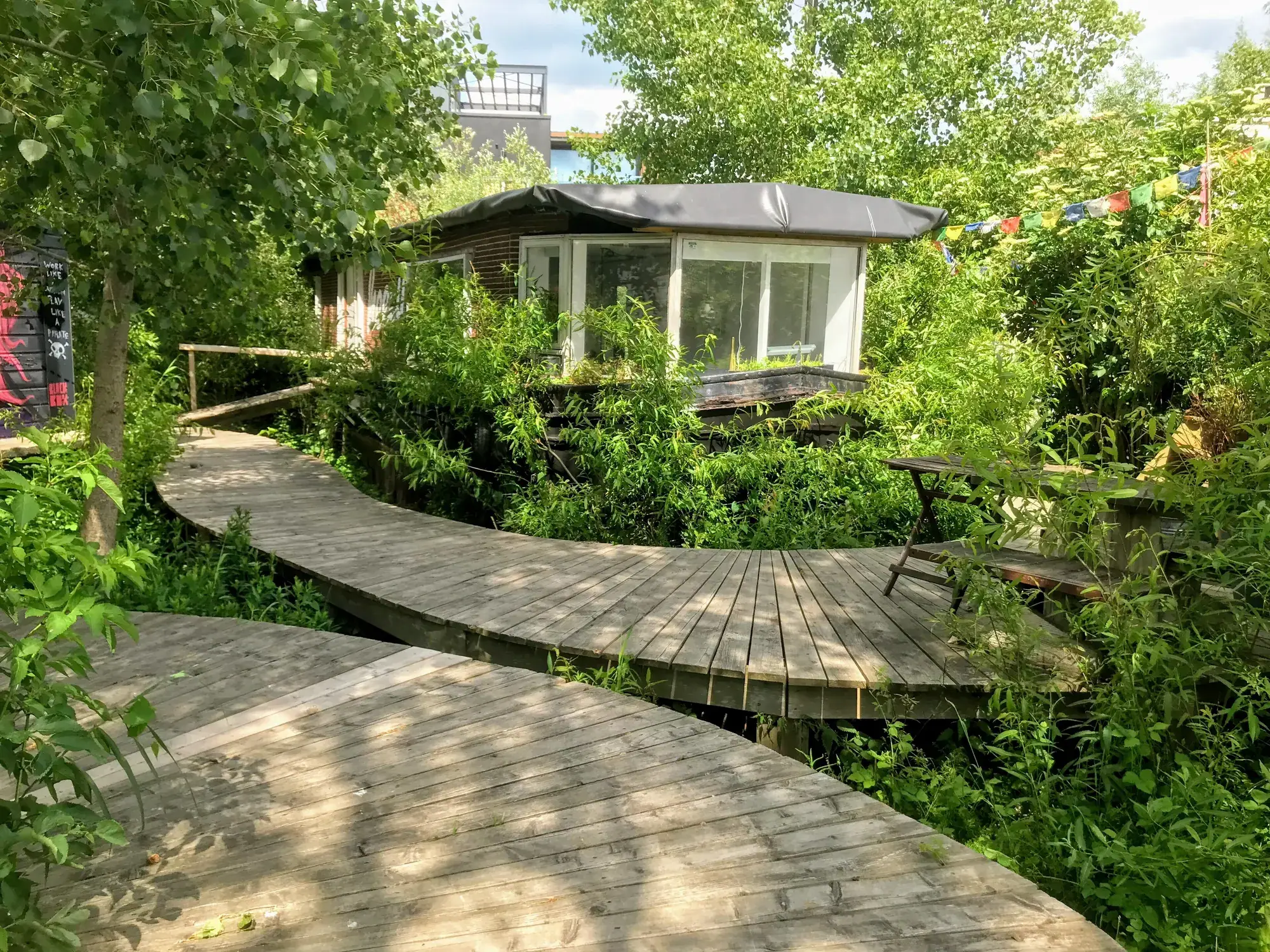
The Volharding shipyard opened in 1919 on the Johan van Hasselt canal, next to the Fokker aircraft factory. Renamed Ceuvel-Volharding in 1972, it closed in 2000, unable to keep up with competitors. Its buildings were demolished in 2002. Almost a century of industry left heavy metals and oil residues in the soil: no foundations or utility lines can go deeper than 50 centimetres.
In 2012 a group of architects won the City of Amsterdam’s tender and secured the site for ten years. Space&Matter drew up the plan, DELVA Landscape Architects the garden and the consultancy Metabolic the technical systems. The houseboats cost almost nothing: for their owners, giving them away was cheaper than paying for their removal. The future tenants renovated them at the NDSM wharf, then a crane lifted them one by one onto the 4,470 m² plot.
Since nobody can dig, everything stays above ground. Each office boat has a compost toilet, a heat pump and a ventilation system that recovers more than 60% of the heat from outgoing air; kitchen water runs through planted filters. More than 150 solar panels produce around 36,000 kWh a year. Between the hulls, willows, poplars and grasses draw pollution out through their roots. The association says its yearly measurements show that a large part of the site is now clean.

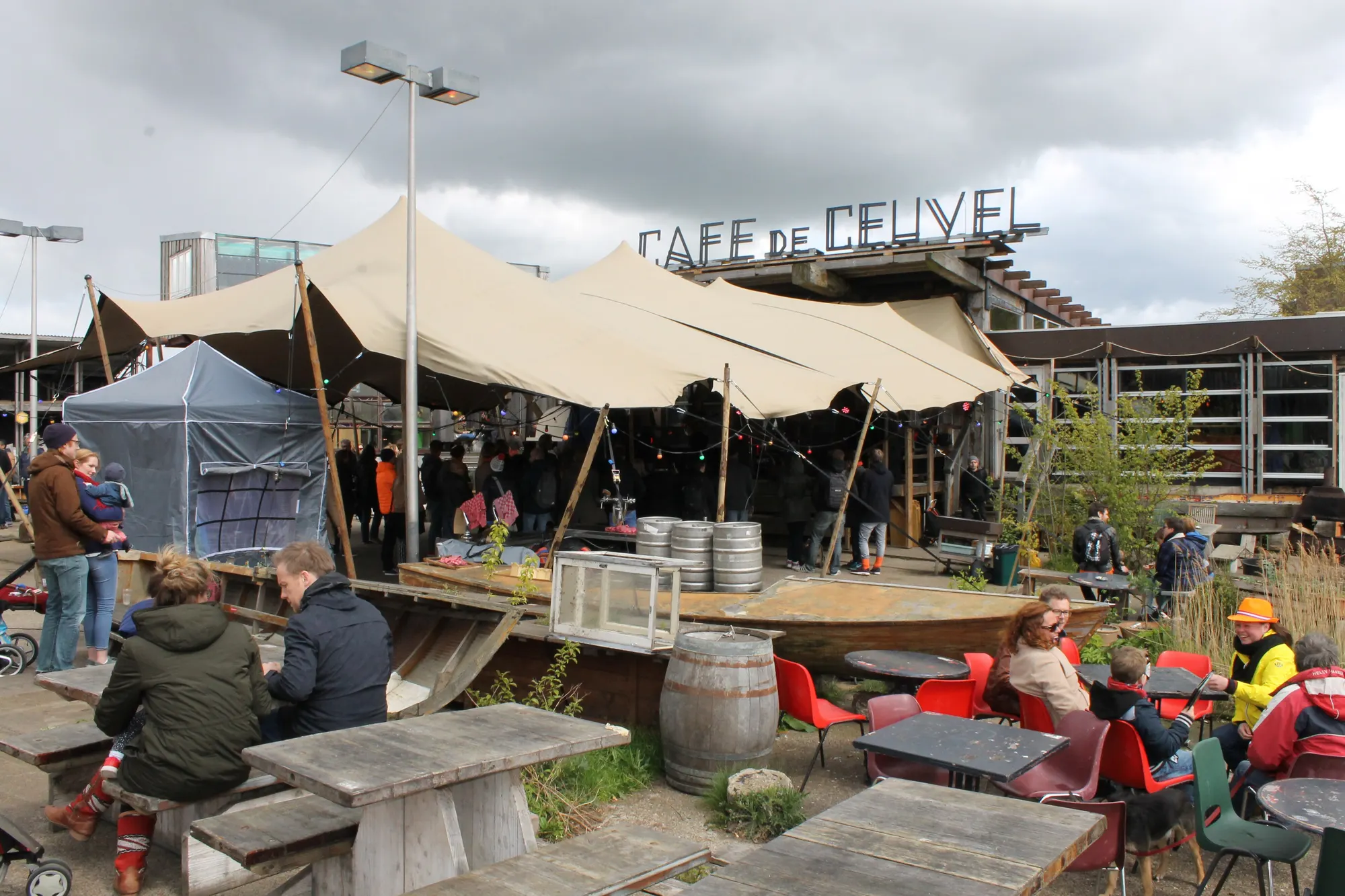
Fourteen houseboats are rented out as studios to some sixty tenants: architects, filmmakers, designers, musicians, foundations. The café, designed by Wouter Valkenier from an old lifeguard post and 80-year-old mooring bollards from Scheveningen harbour, has become the public’s way in. Since November 2023 the association has been a “Zoöp”: a representative speaks for plants, animals and soil when decisions are made.
The ten-year lease has been extended three times. In a letter to the city council reported by NH Nieuws on 5 June 2026, alderman Steven van Weyenberg announced the last one: the site must be handed back empty in early 2028, then cleaned up and built on. In February, De Ceuvel and local residents had asked to take it over without a tender, to build 21 affordable cooperative homes and keep the purifying park. The city’s legal review ruled this out and invited the association to compete in the tender. “It has become such a beautiful place. A frayed edge of the city. And it is exactly these places that are disappearing,” co-founder of the café Toon Maassen said in February.
For a team, time is short. De Ceuvel runs private tours for companies and groups, including a walk through Amsterdam-Noord, a district in transition (tours@deceuvel.nl). Two rooms, the Metabolic Lab and the Crossboat, seat up to 30 people, with a plant-based meal from the café, which also takes bookings for groups of eight or more.
Opened in 2014 on the 4,470 m² of a shipyard that closed in 2000, De Ceuvel brings together fourteen studio houseboats rented to some sixty tenants, a lab, two meeting rooms, a café and a hotel of six floating boats. More than 150 solar panels produce around 36,000 kWh a year; the office boats run without gas or sewer connections. According to the association’s yearly measurements, plants have cleaned a large part of the soil. The lease, granted for ten years in 2012 and extended three times, runs until early 2028.
Photos: Superbass, Wikimedia Commons (CC BY-SA 4.0: 1 2 3 5) ; Philip Shannon, Wikimedia Commons (CC BY 2.0: 4).
Would you like to meet these people with your team? in:Expeditions designs tailor-made learning expeditions around places like this one.
 Or design it yourself with Agent A\lex →What is a learning expedition? →Learning expedition: Amsterdam and Rotterdam, pioneers of the Doughnut economy →