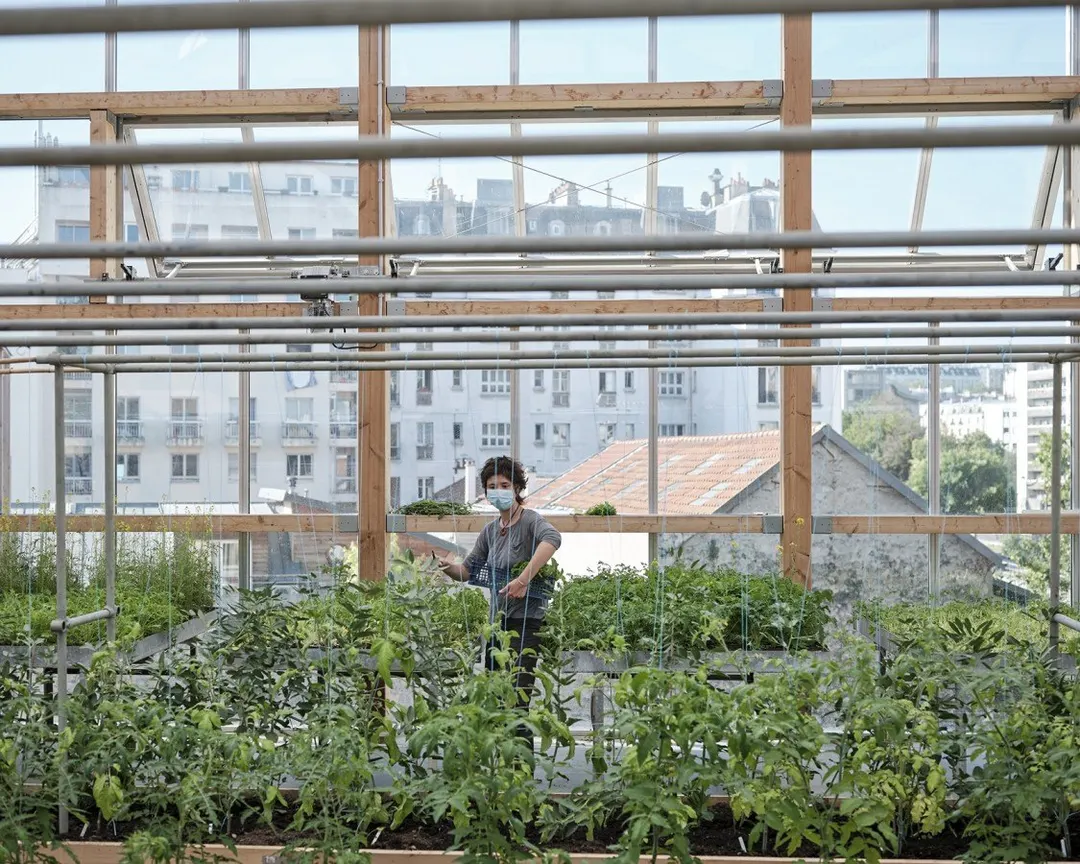
On rue de l’Ourcq, on a 1,300 m² plot cut from the old Petite Ceinture railway, La Ferme du Rail houses fifteen people in social reintegration and five horticulture students above its crops. Selected by Reinventing Paris in 2016 and opened on 17 December 2019, it employs its residents in market gardening, neighbourhood composting and its own restaurant.
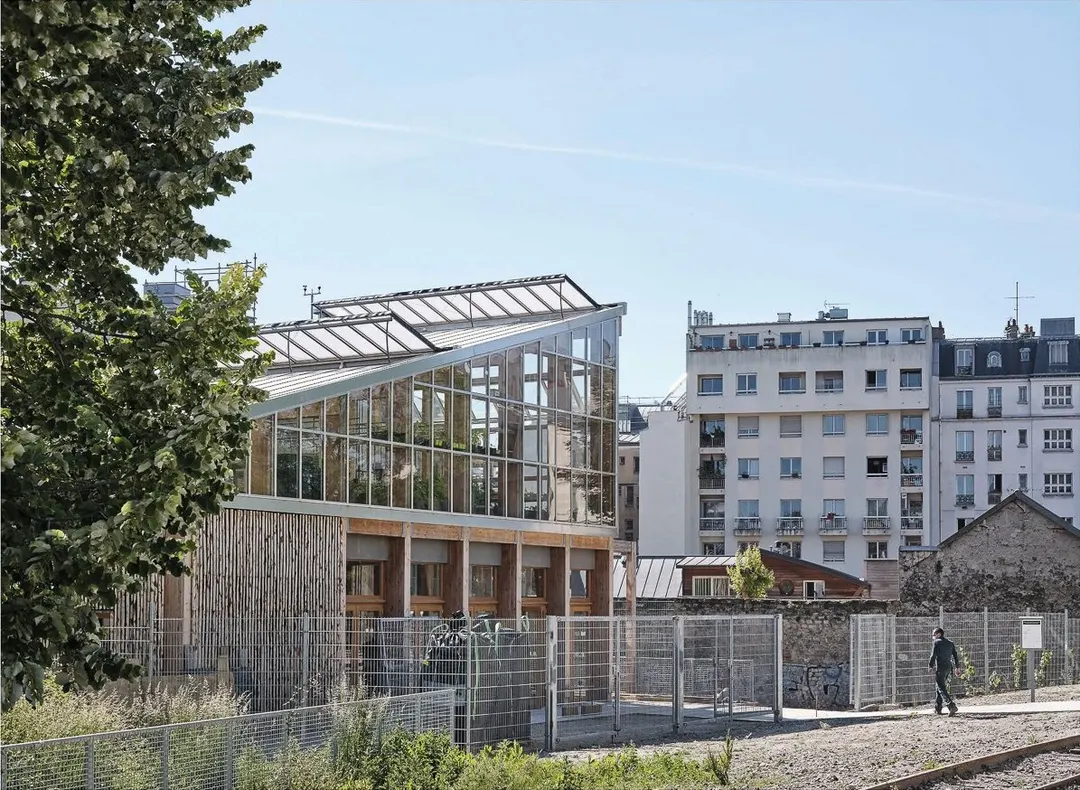
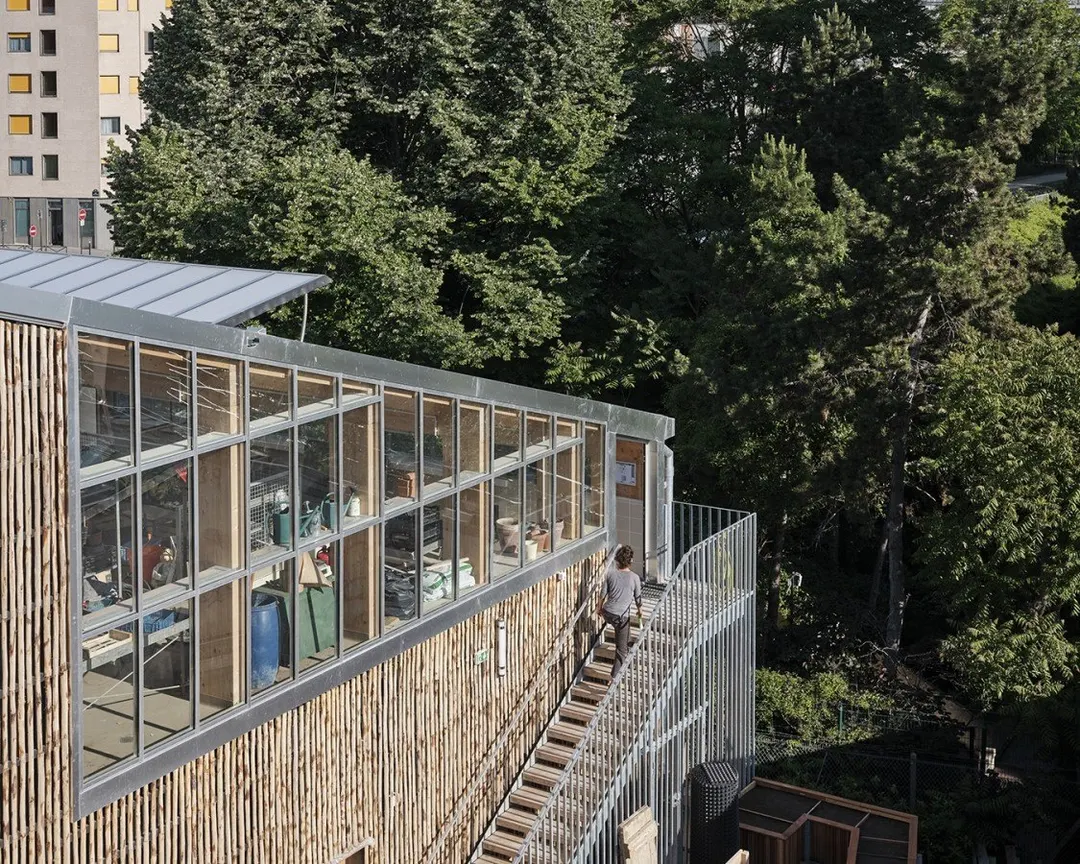
The idea came from residents and local associations in the 19th arrondissement, working with the architecture cooperative Grand Huit and landscape architect Mélanie Drevet. In February 2016 the City of Paris selected their project for the Ourcq-Jaurès site of the Reinventing Paris call for projects, launched in 2014. The plot, removed from the railway estate and bought by the City, stays public: it is let for fifty years under a building lease. Réhabail, the developer, holds the lease.
The land had been a lorry park and a garage. Before building, 3,300 m³ of polluted soil had to be removed; crops now grow in mounds and beds isolated from the original ground and filled with compost. The two buildings, designed by architects Clara Simay and Julia Turpin, have a timber frame, straw-bale insulation and raw chestnut cladding. Five of the sixteen construction packages went to work-integration companies.
Reuse is visible everywhere. Retaining walls and steps are built from kerbstones taken from the City’s stock; old windows from social housing became railings for the roof planters; plywood from a fashion show was turned into bedroom wardrobes, and advertising banners were sewn into blinds. The works cost 3.3 million euros before tax, for a total investment of 4.35 million, including a 630,000-euro state grant from the Ville de demain programme.

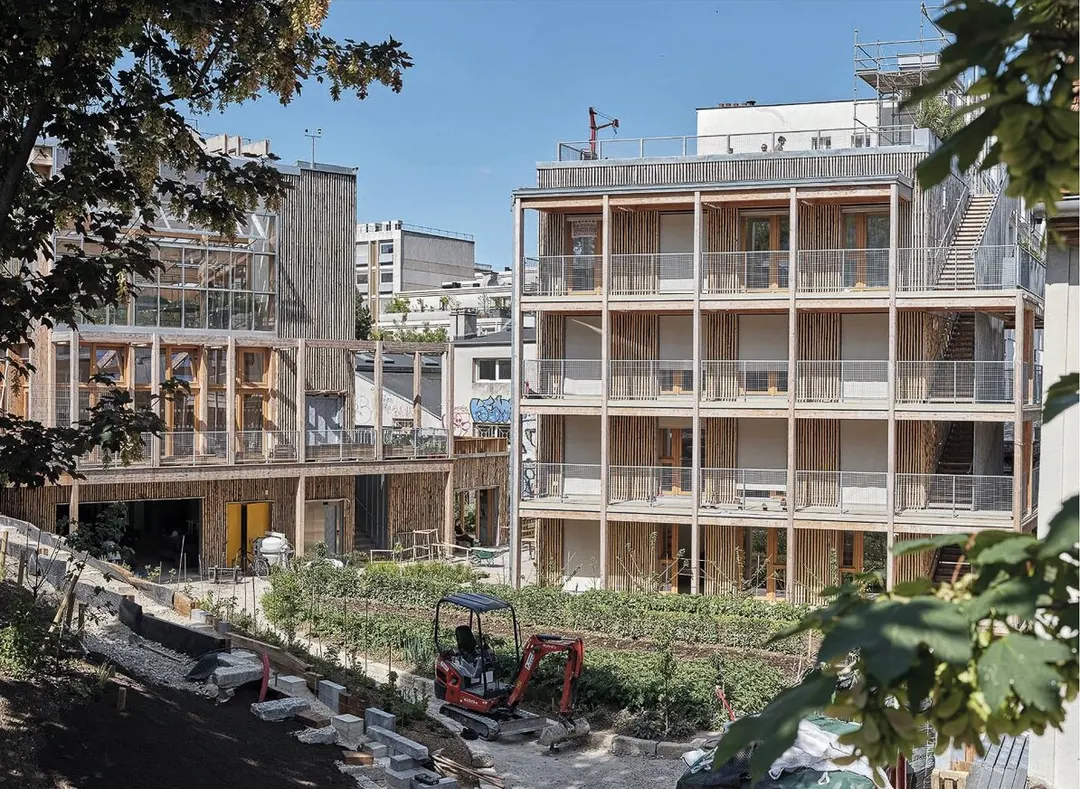
Funding was pieced together from many small contributions, so that the project would not depend on one large backer. Clara Simay says the farming side was the hardest part to finance. Three organisations run the site: Travail & Vie employs the residents on a work-integration scheme, Bail pour Tous manages the student residence, and the restaurant Le Passage à Niveau, opened in summer 2020, serves what grows in the greenhouse and on the mounds. Residents in reintegration follow the same house rules as the students.
The first results are modest and measured. After two years the farm had grown more than four tonnes of vegetables, composted twenty tonnes of food waste and employed 23 people, restaurant included, fifteen of whom live on site. Waste arrives by cargo bike from nearby restaurants and florists and from about a hundred local members. Because it grows in the city, the produce cannot be certified organic. In 2022 the building was one of five finalists for the European Union Mies van der Rohe architecture prize, out of 449 projects.
For a team, La Ferme du Rail takes half a day: the greenhouse and mounds, the straw construction visible in the façades, the reused materials, then lunch at Le Passage à Niveau. The site is open to the public, except the homes and work areas. The City of Paris runs guided tours that continue along the Petite Ceinture walkway. A group visit with Travail & Vie’s supervisors can be requested from the association (laferme@travailetvie.org); it is not guaranteed.
Opened on 17 December 2019 on 1,300 m² of the former Petite Ceinture railway, La Ferme du Rail houses 15 people in reintegration and 5 horticulture students. In two years it grew more than 4 tonnes of vegetables, composted 20 tonnes of food waste and employed 23 people. Timber and straw buildings, 3.3 million euros of works, finalist for the 2022 Mies van der Rohe prize.
Would you like to meet these people with your team? in:Expeditions designs tailor-made learning expeditions around places like this one.
What is a learning expedition?
Learning expedition: Paris, experimenting before investing →

 Agent A\lex