ThemesEcological transition · Circular economy · Climate Tech
This learning expedition is tailor-made for your group: length, encounters and pace.
Request a programme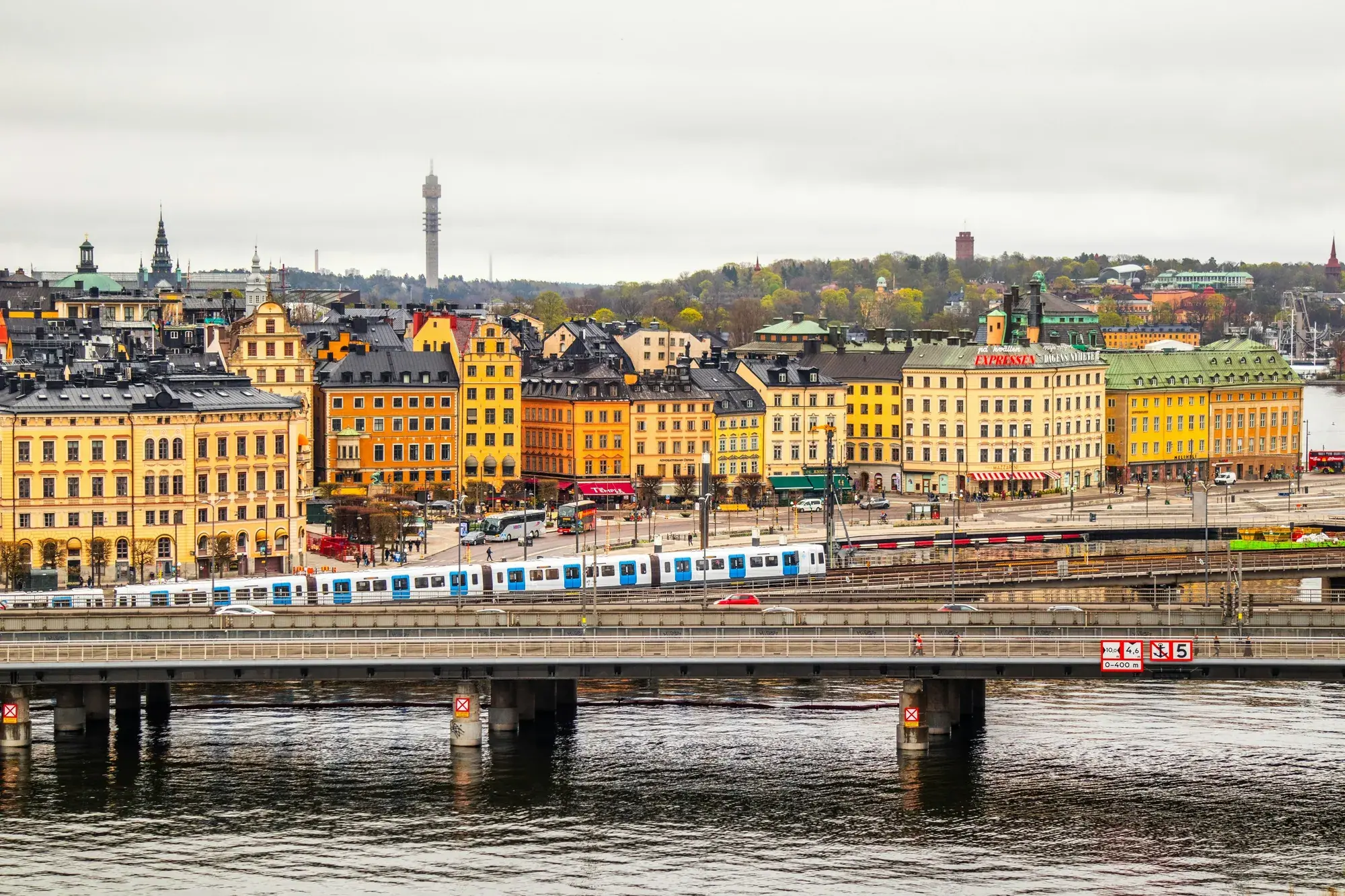
Stockholm Exergi heats more than 800,000 Stockholmers through some 3,000 kilometres of pipes. Part of that heat comes from what the city throws away: at Hammarby, heat pumps draw it from treated wastewater, and since 2017 the Stockholm Data Parks programme has invited data centres to pass theirs on to the network. At Värtan, the company is building a plant designed to capture up to 800,000 tonnes of CO2 a year from 2028, more than the annual emissions of all the city’s road traffic, and to store it under the North Sea. An hour away by train, Eskilstuna applies the same logic to objects. For a company, Stockholm shows how waste becomes a resource once someone builds the network to take it back.
Approved in 1996 as Stockholm’s first environmentally profiled district, Hammarby Sjöstad was first meant to be an Olympic village, for a bid that lost to Athens. Homes are heated with treated wastewater, and waste is sorted at the foot of each building and carried away through an underground vacuum system. Next door, the Hammarby plant supplied 1,072 GWh of heat to the network in 2025, drawn from the water of the Henriksdal treatment works. The city runs study visits: the guide meets groups at the GlashusEtt pavilion.
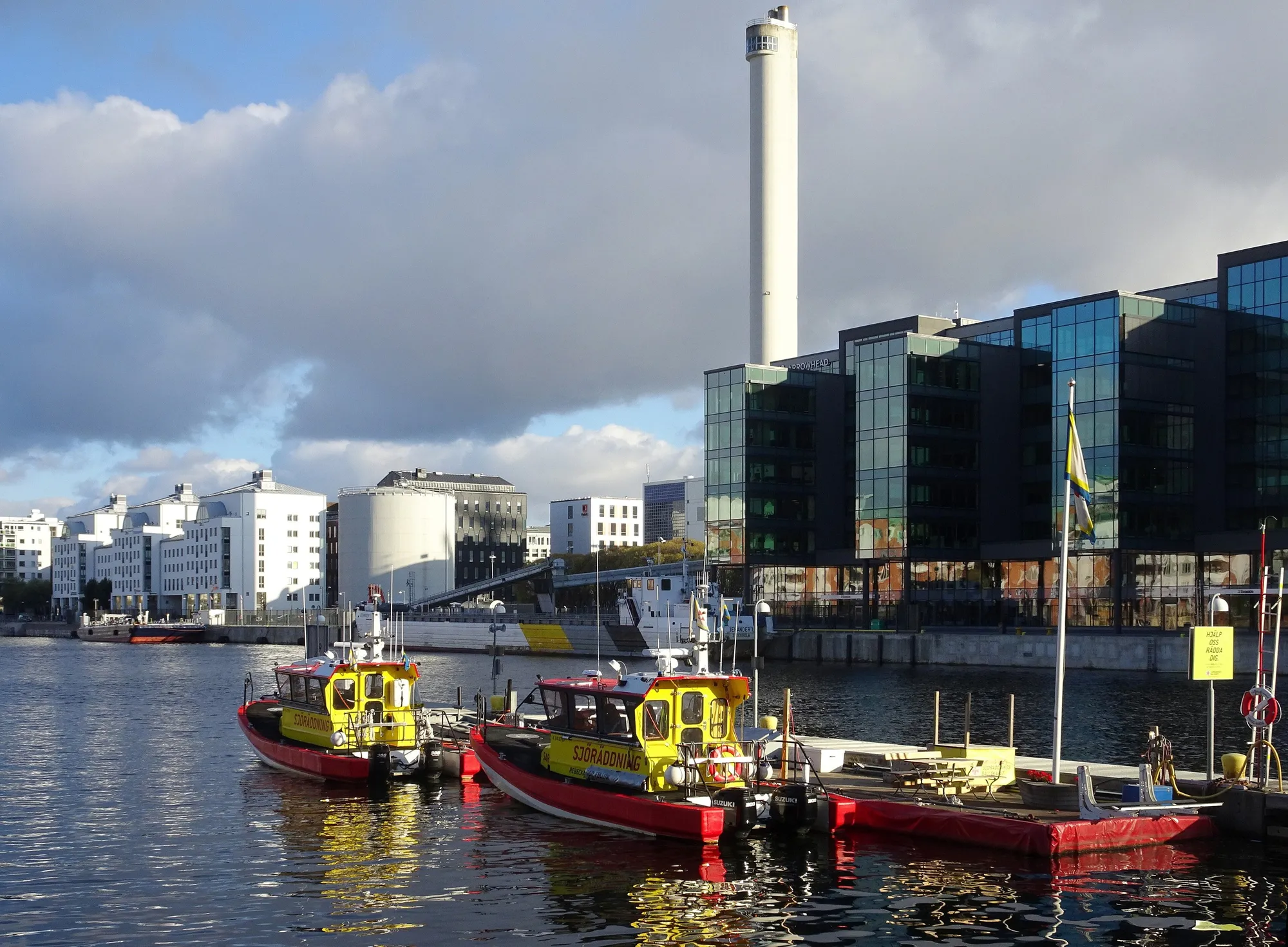
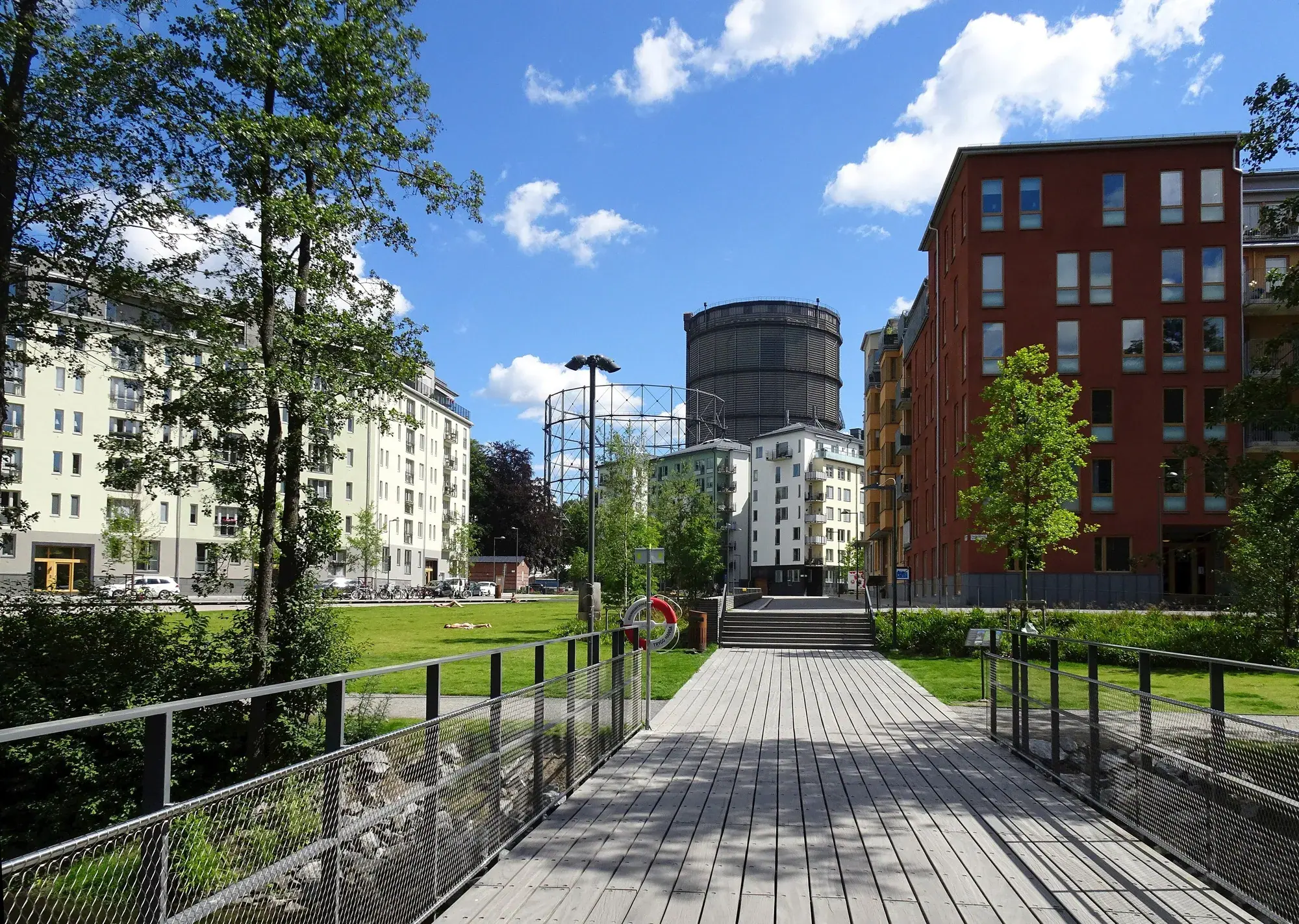
In the north-east of the city, Norra Djurgårdsstaden is transforming 236 hectares of port and industrial land: at least 12,000 homes and 35,000 jobs are planned, and 3,160 homes are finished. The first went up in 2011, the year the gasworks stopped production; its brick gasholders, designed by Ferdinand Boberg in the late nineteenth century, still stand at the centre of the district. A local logistics centre has reused 1.12 million tonnes of rock and excavated soil on site and saved more than 56,200 truck journeys. Next door, in the energy port, the Värtan carbon capture plant is under construction. The city runs study visits there.
Opened on 28 August 2015 in Eskilstuna, ReTuna describes itself as the world’s first reuse shopping mall. It is owned by the municipal company Eskilstuna Energi och Miljö. Residents drop off their belongings at the recycling centre next door; a municipal team sorts them, then the mall’s shops, including an IKEA second-hand store, repair, transform and sell them. In 2020, ReTuna sold 15.4 million kronor worth of goods, and it has created more than 50 jobs. It offers study visits of about an hour, by appointment.
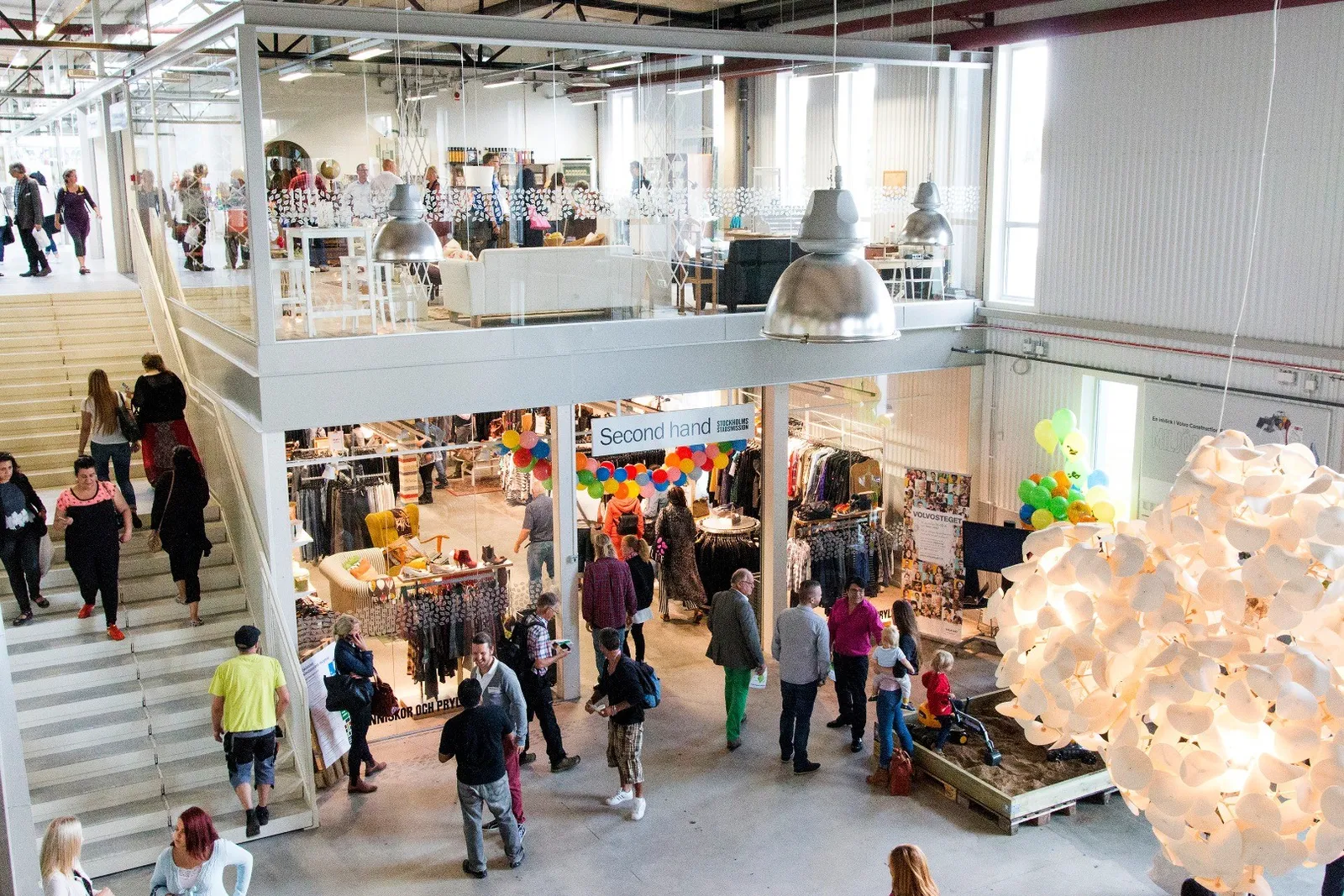
Photo credits : Jimmy Hu, Holger Ellgaard, Eskilstuna Energi och Miljö (Eemab), Arild Vågen (Unsplash, Wikimedia)


 Agent A\lex