ThemesSocial innovation · Hybridizations of spaces · Business with Impact
This learning expedition is tailor-made for your group: length, encounters and pace.
Request a programme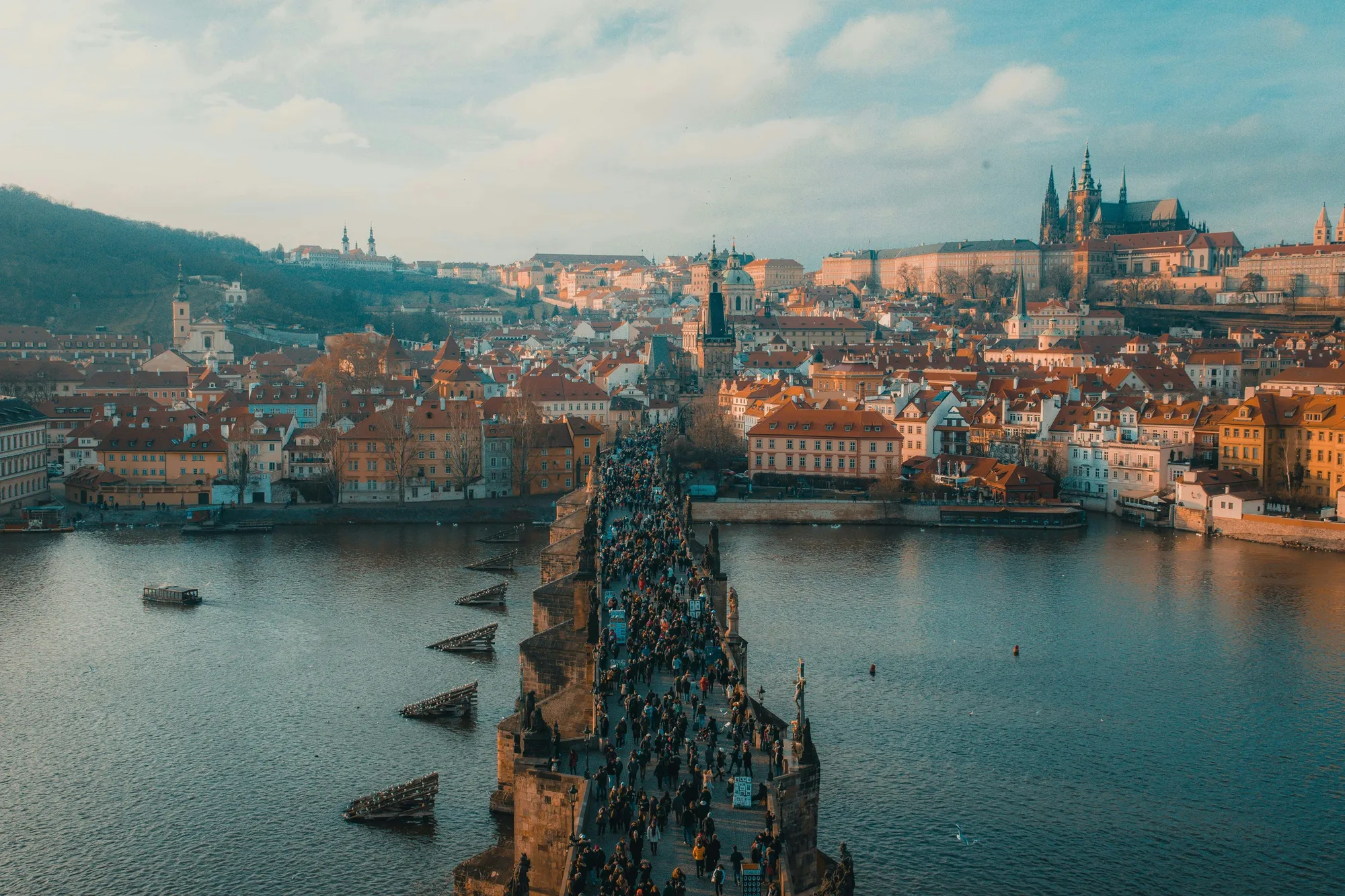
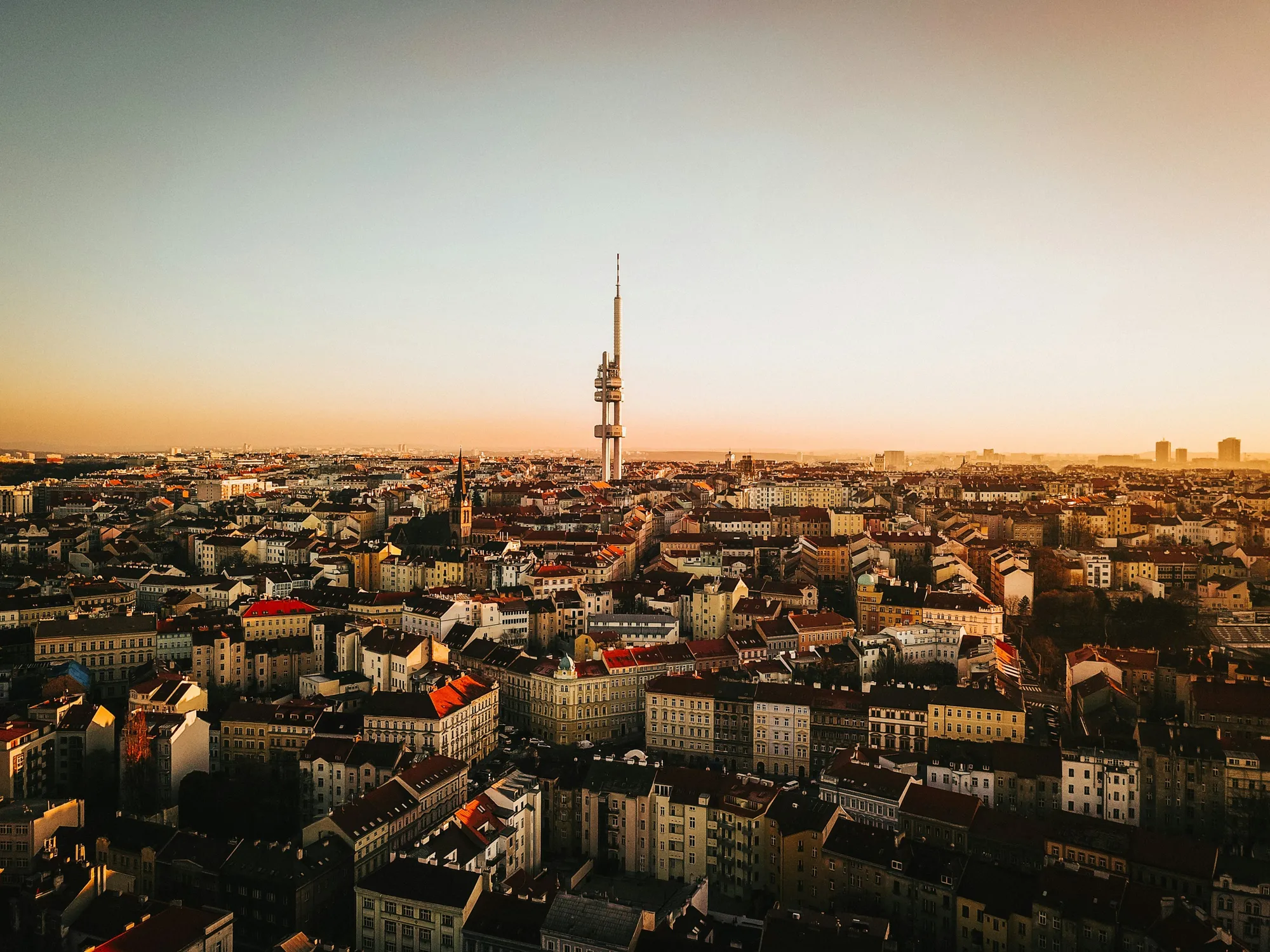
In 2006, the Auto*Mat association held the first edition of “Zažít město jinak” (“Experience the City Differently”) in Prague: for one day, streets were handed back to residents. Twenty years later, these neighbourhood festivals take place in more than 160 locations across Czechia. In 2012, three students founded Pragulic, which trains homeless people to guide city tours. In 2017, Charles University reopened to the public a city-owned house on Hybernská street that had stood empty for more than ten years. In May 2026, the social enterprise Kokoza opened a shared garden of about five hectares in Krč. Since 1 January 2025, Czech law has recognised the integration social enterprise, which must employ at least 30% of staff with specific needs. For a team, Prague shows how initiatives born outside institutions end up working with them.
On the street that runs from the Powder Tower, the city-owned house at Hybernská 4 stood empty and unused for more than ten years. In April 2017, Charles University’s Faculty of Arts reopened it to the public; since 2021, Kampus Hybernská has been an institute run jointly by the university and the city. It houses a café, artists’ studios and a circular workshop where people repair furniture, bikes and instruments with salvaged materials. Its Cirkulární hub, opened in autumn 2022, hosts conferences and team-building events in an 80-seat hall.
Founded in 2012 by three students, the social enterprise Pragulic trains and employs as guides people who are or have been homeless. Each one shows their own neighbourhood and tells their own story: Žižkov, Palmovka, Smíchov, the area around the main station. More than 150,000 people have taken these tours, according to the company. For businesses, Pragulic arranges private two-hour tours in Czech, English, German or French, as well as talks about its model and about homelessness.
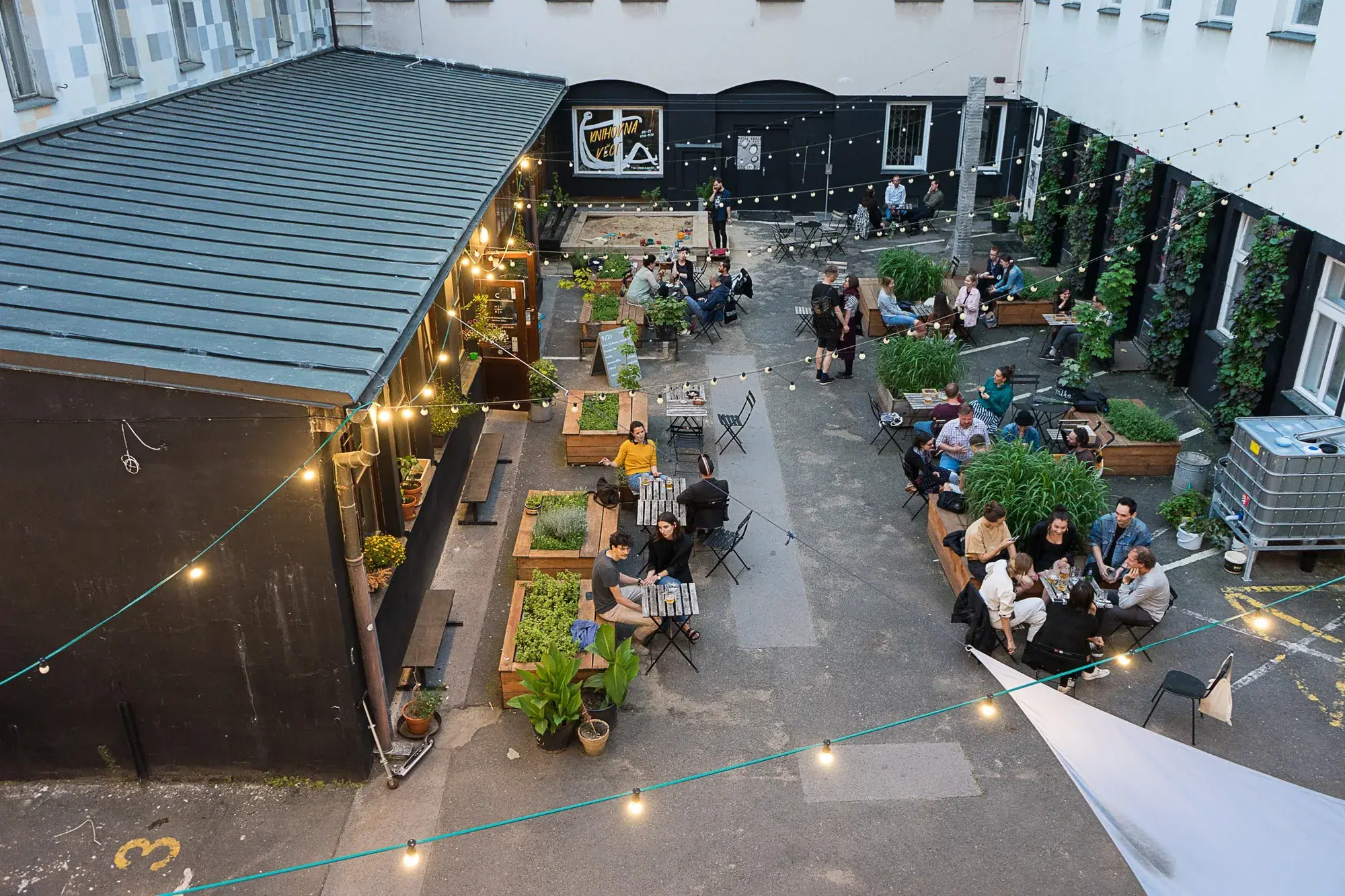
Every September, during European Mobility Week, hundreds of volunteer organisers close streets, courtyards and squares to cars for a day: tables, local food, children’s games, debates about public space. Auto*Mat, which has coordinated these festivals since 2006, obtains the permits to use public space and advises the organisers; the 20th edition took place on 20 September 2025. Since 2011 the association has also run “Do práce na kole”, a nationwide challenge to get to work by bike, on foot or running.
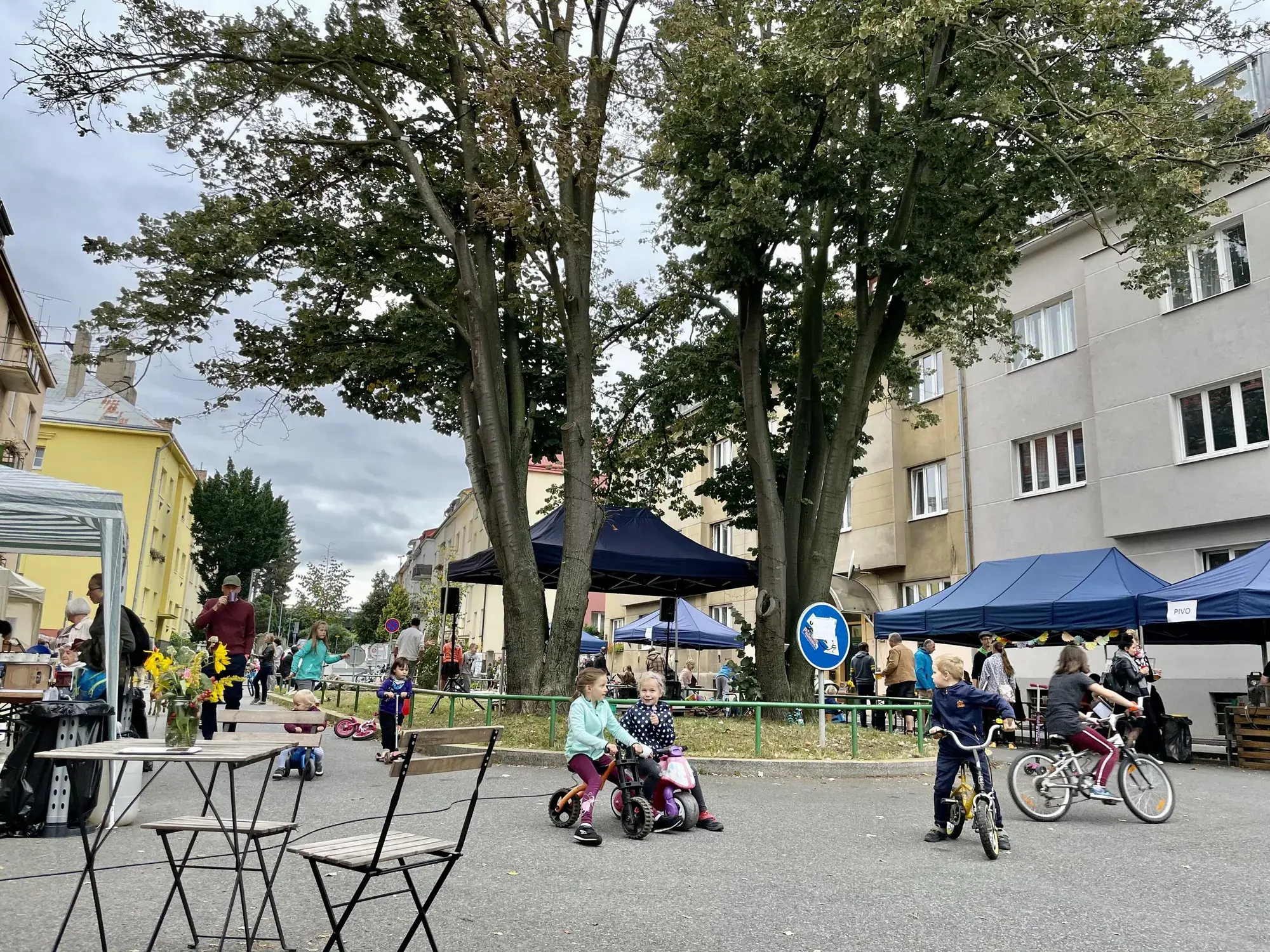
Photo credits : Anthony Delanoix, Natálie Dudová, Jerry Kavan, Martin2035, Meg von Haartman (Unsplash, Wikimedia)


 Agent A\lex